December 2025Lesson
Ship the New Path Beside the Old One
FreeBSD 15.0 offered a package-managed base system as a preview while keeping the traditional install method for the whole release branch.
Execution • 2 min read
Read article Articles on infrastructure, wireless, and the systems behind them. Every article, newest first.
240 articles
FreeBSD 15.0 offered a package-managed base system as a preview while keeping the traditional install method for the whole release branch.
Long timelines can reveal how systemic ambition often tests organizational endurance.
Managing global dependencies could demand adaptable strategic design when trade policies shift.
Early material commitments might prove critical when foundational structures undergo significant operational resets.
Bundling separate objectives into a single package might expose critical projects to unnecessary political or operational friction.
Operational geography can force sovereign entities to look beyond their own borders for practical infrastructure solutions.
Rapid handoffs in public leadership can highlight how institutional execution depends on long-term structures rather than immediate speed.
Why redeploying established tools for new applications might offer faster paths to practical impact.
Early technical findings might offer valuable signals when teams pair them with iterative validation.
Creating administrative bodies can mark strategic intent, but real competitive ground is often gained in physical operations.
Placing specialized sensors far below surface noise can arguably allow teams to identify rare anomalies.
Relying exclusively on third-party digital stores can expose software products to unexpected marketplace disruptions.
Sustained focus over long horizons could be essential when rebuilding complex physical structures.
Targeted mechanical intervention can unlock critical insights in hazardous environments.
Long-term computational tasks may show how structured persistence can unlock quiet progress.
Retiring legacy systems might be as vital for long-term execution as building new architecture.
Expanding the pool of applicants can test evaluation criteria and decision framework design.
Early signals can suggest significant outcomes, but careful verification might guide the best decisions.
Iterative test flights can yield crucial physical baseline data even when complex long-term projections remain disputed.
Legal challenges between global tech entities and governments can signal a broader shift in how platforms manage sovereignty and compliance.
Long-term operational commitments can often reveal that quiet architectures remain recoverable.
Real-world operational tests might expose hidden friction points that simulation models could easily miss.
Combining distinct technological methods can perhaps uncover historical evidence that single disciplines miss.
Practical hardware limits can help set parameters for later engineering projects.
A spacecraft that stops sending data might remind engineers that asymmetric control channels can matter for legacy system survival.
Breakthrough technology might depend more on sustained operational alignment than initial discovery.
Building complex systems can require launching initial architectures before full operational clarity exists.
Placing sensors at dedicated vantage points can offer clearer operational visibility.
Complex execution journeys could demonstrate that long preparation cycles reshape how team milestones are evaluated.
Internal alignment on fundamental rules may dictate the stability of complex organizational structures.
Identifying core elements in complex environments may depend on patient observation.
Expanding structural capacity can signal ambition, but true progress may still require consensus.
How ambitious physical testing might offer critical data despite early operational failure
Broad network adoption may depend as much on commercial standardization as technical breakthrough.
Early safety triggers in automated operations may preserve hardware and grant crucial diagnostic time.
Single points of failure in administrative workflows might jeopardize complex operational networks.
The conclusion of a historic hardware run could offer lessons for long-term platform planning.
Physical infrastructure choices may create long-term exposure when vendor governance models conflict with operational requirements.
Building with predictable, standardized components could transform technical execution.
Navigating toward precise physical endpoints may require shifting control to local automated logic.
Iterative updates to foundational platforms might allow builders to respond faster to evolving real-world demands.
Unplanned operational reductions can highlight the limits of centralized infrastructure planning.
When unexpected environmental stresses strike critical builds, dynamic post-launch adjustment might help preserve performance.
Purpose-built devices can create entirely new habits before being absorbed by general software systems.
Capital moves can rapidly alter the governance and future trajectory of shared communication tools.
Capital allocation alone might not guarantee localized technical resilience.
Uncovering unexpected records in deep strata might challenge established assumptions about historical progress.
Reaching a distant operational milestone may depend on sustained precision over time.
Physical validation of long-standing concepts may demand systems built for extreme environments.
Discoveries in dynamic systems can reveal how baseline maps might perpetually remain incomplete.
External limits could encourage teams to focus on core operational stability.
A shift in legal boundaries could change how builders structure digital product ecosystems.
Reliable supply routines may redefine what teams can build in remote environments.
Ambitious physical ventures can test both commercial models and operational discipline.
Sustained focus over decades might allow teams to approach difficult environments with greater clarity.
Staged deployment timelines and modular designs may offer practical models for managing complex technical projects.
Converting local inputs at the point of use could reduce reliance on heavy supply lines in complex environments.
Cross-border engineering efforts can show how shared systems might expand regional capacity.
Phase-based deployment strategies might lower risks in ambitious technical builds.
A focus on constructive creation can help teams direct effort toward lasting progress.
Setting explicit timeframes for initial directives can clarify expectations across broad organizations.
Growing attention on a proposed transport mode may push teams to ask how early physical trials could complement simulation.
Designing explicit rules for complex interactions can transform abstract ideas into working systems.
Delays and cost challenges can test major infrastructure plans, but sustained delivery may still reshape regional trade.
Securing formal flight clearance can be a critical step toward turning novel transport prototypes into scalable logistics services.
Announcing ambitious multi-year projects might set direction, but execution mechanisms could shape final outcomes.
Navigating complex governance systems can require more than achieving internal consensus within a single operational layer.
Inferring unseen constraints through visible processes might help teams build more resilient systems.
Uncovering forgotten resources might depend on structured methods and persistent field investigation.
Phasing out foundational architecture can often reflect healthy long-term execution.
Navigating massive budget overruns can require changes in project oversight rather than renewed capital alone.
Retiring legacy platforms can encourage teams to focus resources on modern architecture.
Reverting to past baselines during leadership vacuums might exacerbate systemic friction.
Enterprise acquisitions might offer software platforms an immediate path into physical categories.
Rethinking initial working assumptions might help teams resolve unexpected operational friction.
Remote telemetry can confirm fundamental conditions long before physical access becomes possible.
Optical communication in orbit can offer lessons on bypassing data bottlenecks through specialized infrastructure.
Complex orbital architectures may remain vulnerable to unexpected disruptions in terrestrial control operations.
Isolating operational objectives can help teams achieve mission success despite schedule delays.
Moving from physical reference points to fundamental rules might make global collaboration more durable.
How combining isolated instruments into a unified system could make the invisible visible.
Establishing common technical baselines can help software platforms solve universal user challenges.
How extended operations might challenge original operational assumptions.
Expanding observation ranges may help technical teams detect transient signals that standard tools miss.
Public spectacles may capture temporary headlines, but long-term brand equity might rest more on core execution.
Selecting featureless operational zones might provide the quiet stability required to isolate low-noise signals.
Public demonstrations and changing norms of communication can signal shifting power dynamics.
Extended prototyping cycles might allow safety and infrastructure systems to mature together.
Durable architecture may preserve underlying systems far longer than temporary contents.
Capturing early formation processes can offer unique insights for complex technical design.
Why building functional redundancy could protect operations when facilities face unexpected interruptions.
Shifting standard geographical starting points can open unexpected avenues for complex engineering.
Uncovering one structural failure can often reveal shared execution blind spots across an entire system.
Strategic efforts can quickly unravel when leadership shifts alter institutional commitments.
Searching for a missing target can sometimes uncover forgotten infrastructure.
Practical execution through real-world trial flights might offer the clearest proof for complex physical systems.
Formal frameworks can transform experimental digital concepts into institutional tools.
Long-held historical narratives can shift when modern investigative techniques re-evaluate existing physical ground.
Unexpected anomalies might require teams to rethink early classifications and adapt existing frameworks.
Integrating new capabilities into established hardware can shape how software ecosystems develop.
Balancing operations across distributed nodes may require sharp organizational adjustments when counterparties shift terms.
Defining explicit transition timelines might help organizations shift resources toward newer technology.
A transition from initial discovery to repeated operation may change how technical teams evaluate system maturity.
Committing to ambitious technical scope before operational release can help anchor complex systems.
A series of indirect observations might reveal more about complex systems than immediate results.
Recovering core components might turn fixed infrastructure into repeatable assets.
High-density payload deployment suggests that operational performance can grow through precise orchestration.
Retiring established communications hardware may depend on balancing network efficiency against user adoption barriers.
Observing fragile structures might depend on designing custom traps that isolate volatile components.
Uncovering accessible materials on site can fundamentally alter long-term expedition planning.
Pioneering architectural mechanical structures can take decades of iteration before broader practical uses unfold.
Component-level validation could serve as the foundation for complex multi-stage architectures.
Merging complementary infrastructure lines could signal a shift toward broader system design.
Top-down interventions may struggle to account for organic growth in sprawling organizations.
Microsoft's .NET Core 1.0 fixed a runtime and a support window while saying openly that the tooling was still in preview.
Reusable hardware recovery could turn speculative engineering milestones into repeatable operational processes.
Complex long-term endeavors might rely on balancing extreme constraints with methodical stage-by-stage pacing.
Polarizing language might yield immediate attention, but can make future alignment significantly harder.
Shifting regulatory frameworks can force teams to reconsider how information moves across borders.
Managing extreme intake backlogs may require institutions to balance processing volume with downstream capacity.
Auxiliary tools might provide an alternative path forward when primary components experience severe breakdowns.
Differing interpretations of infrastructure deployment and routine monitoring can complicate systemic decision making.
Uniting distinct factions might offer the resilience needed during severe operational shocks.
Tailored physical components can reframe complex engineering challenges.
Static controls may prove ineffective when external pressure continues to accumulate.
Executing autonomous operations during critical phases might yield better results than demanding constant feedback.
Shifting toward high-volume assembly can transform how complex physical infrastructure is built.
Unilateral changes in shared environments can redefine system dynamics faster than traditional governance frameworks might respond.
Measuring progress in complex engineering might depend on learning from active test attempts.
Incremental daily movement can aggregate into unprecedented long-distance engineering milestones.
Choosing a simpler test target may sometimes help protect a complex program.
A single fault might cut off vital feedback without destroying the hardware underneath.
Uncompleted physical projects and transitional states may require proactive risk management to withstand unexpected hazards.
Remote intervention capabilities can protect users quickly, but they may also reshape how authority works across platform ecosystems.
Hard boundaries in system design can sometimes be bypassed through clever procedural shifts.
Long-distance positioning can set the stage for specialized local measurements.
Complex technical operations might depend on long-term preparation and patient coordination.
Sustained commitment to foundational systems can help long-term projects survive extended timelines.
Sharing core technical foundations can help build an ecosystem faster than defending proprietary borders.
Navigating major industrial projects can depend heavily on long-term technical partnerships.
Phasing out legacy operating software can encourage teams to reassess technical debt.
Adding a second high-capacity link can offer valuable lessons for network design and traffic management.
A lean operational model can enable small teams to serve hundreds of millions of users without excessive overhead.
Real-world environmental shocks may reveal physical vulnerabilities that standard testing models miss.
Incremental operational milestones may offer a sustainable framework for ambitious technical endeavors.
Official measurement criteria often dictate how a complex technical achievement is recognized.
Combining coarse approximations with fine-grained modeling can offer a clearer path to solving intricate engineering problems.
Massive recovery efforts can show how stabilizing a failed project might require more resources than initial building.
A proof of concept might demonstrate technical capability long before commercial viability exists.
True progress might depend on leaving comfortable milestones to begin distant long-term treks.
Systematic integration across millions of combined cores can rapidly alter performance expectations.
Exploring physical boundaries through radical experiments may offer fresh perspectives on engineering control.
Visual grandeur can overshadow hidden vulnerabilities until unexpected disruption occurs.
Dynamic physical configurations can allow large technical systems to adapt as goals change.
Some high-throughput infrastructure may need to halt routine operations for a time to make room for major upgrades.
When a product reaches a very large audience soon after launch, early feedback from builders may be one of the most useful signals a company can receive.
How canary sector rings, dual-bank flash partitioning, and management-gateway ping watchdogs prevent mass CPE firmware updates from stranding rooftop radios.
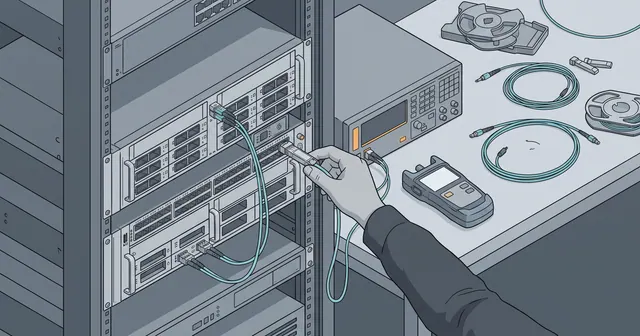
Why 10GbE optical links that pass basic light continuity tests suffer bit-error bursts from reflective connectors, splice anomalies, and 1550 nm macro-bending loss.
How adaptive modulation hides microwave capacity drops from link-state routing and why capacity-aware OSPF cost adjustments with hold-down hysteresis prevent packet loss.
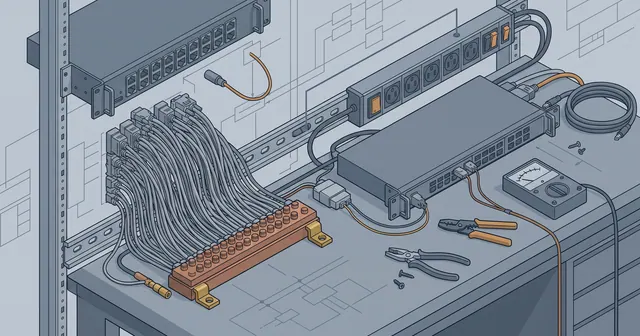
Coupling hardware watchdog timers to multi-stage application health probes so locked remote appliances recover without exposing IPMI ports to public networks.
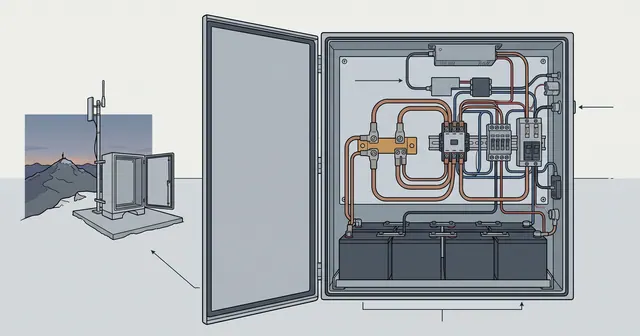
Sizing absorbed glass mat battery banks for winter insolation minimums, filtering MPPT switching noise near radio receivers, and staging low-voltage load shedding.
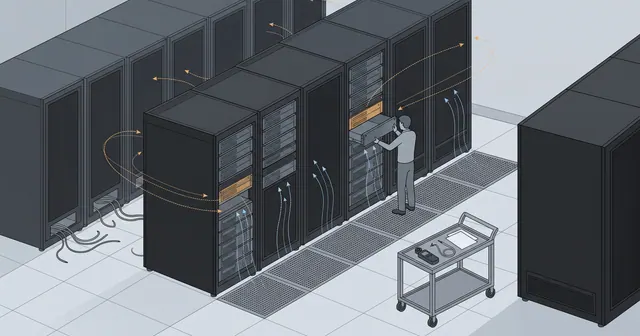
Why increasing room cooling fails to lower top-of-rack inlet temperatures when open rack bays and floor cutouts allow exhaust air to recirculate.
Why standard 802.11 CSMA/CA carrier-sense contention collapses across long-range outdoor sectors and how access-point TDMA polling bounds uplink jitter.
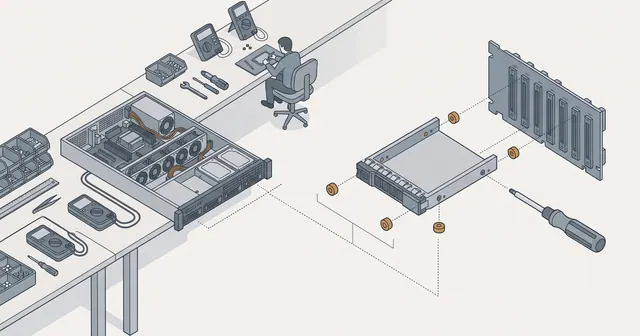
How fan-induced rotational vibration and unthrottled RAID reconstruction combine with drive error-recovery timeouts to knock healthy disks offline.
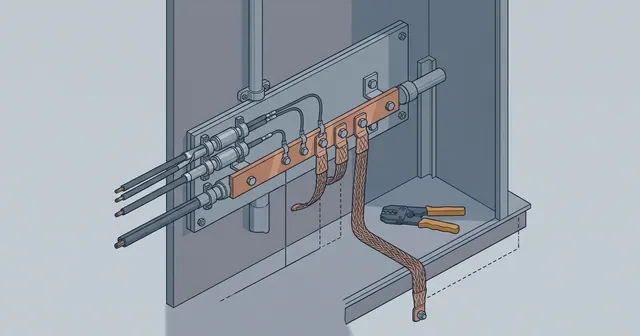
How transient ground-potential rise during a lightning strike drives destructive current through outdoor Ethernet runs when tower steel and equipment shelters are not bonded.
Why bonding dual 10GbE uplinks under IEEE 802.3ad LACP pins routed traffic to a single member unless the forwarding hash inspects Layer-3 and Layer-4 tuples.
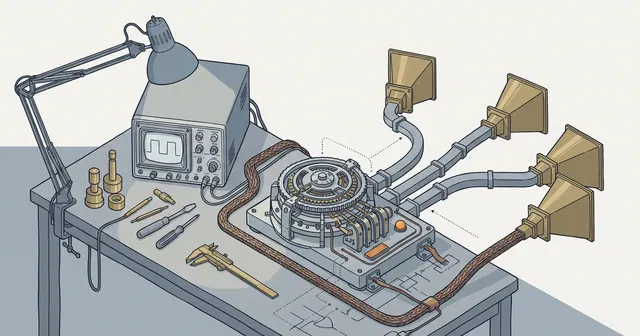
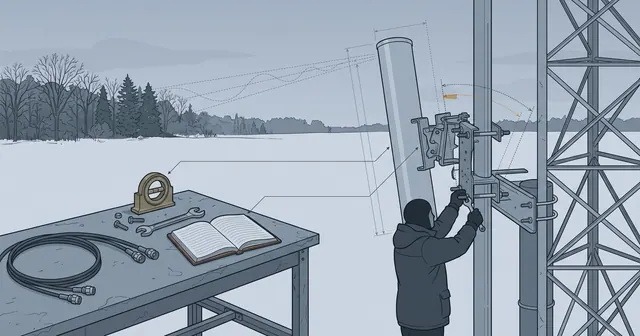
Why strong received signal strength still produces layer-2 retry storms when Fresnel-zone reflections or adjacent-sector interference degrade dual-polarity MIMO chains.
How independent RS-232 console concentrators and isolated -48V DC power relays preserve remote recovery when edge routers lose in-band management.
Why confirming elusive signals requires the friction of independent systems.
Embedding commercial elements into an established environment tests the boundary between authenticity and disruption.
Physical engineering relies on the foundational materials available for translating energy into motion.
Massive infrastructure projects manage complexity by planning for capacity to scale over time rather than targeting maximum output on day one.
What Google's August 2011 agreement to acquire Motorola Mobility might suggest about keeping an acquired business separate.
Specialized instruments often reveal that familiar spaces contain unnoticed elements.
How complex builds can begin under completely different stated intentions.
What Condé Nast's May 2011 agreement to anchor One World Trade Center might suggest about large building projects.
Raw information requires translation into structured representations before it can be understood or applied.
A March 2011 gathering outside Saudi Arabia's interior ministry, and a general question about systems that leave little room for questions.
Formal appointments often collapse under the weight of external reputational damage before execution can even begin.
A January 2011 objection by diplomats at the United Nations, and a general question about depending on outside services.
When formal channels fail, collective action often emerges as a secondary mechanism for signaling systemic distress.
How asymmetric offers attempt to break systemic deadlocks by converting unrelated assets into immediate leverage.
What the end of a building freeze in September 2010 might suggest, in general terms, about pauses and what follows them.
What a September 2010 speech at the United Nations might suggest, in general terms, about how long-term aims and near-term requests sit together.
Proposing a new building often acts as a catalyst for complex social feedback, demonstrating that execution extends far beyond blueprints.
Administrative decisions reach their absolute limit when they manifest as irreversible alterations to the built environment.
What the June 2010 deployment of the IKAROS solar sail might suggest about checking a new mechanism one stage at a time.
A May 2010 demonstration in Afghanistan, and a general question about how grievances become visible.
What the April 2010 events at a state television building in Bishkek might suggest about channels of communication.
How stating unbroken continuity functions as a mechanism to absorb external pressure.
When a mobile system loses its mobility, its remaining capabilities can still define a new mission.
What Kepler's first exoplanet detections in January 2010 might suggest about instruments and the data they produce.
A December 2009 report of a steel wall along the Egypt-Gaza border, and a question about boundaries that reach underground.
Heavy snowfall in China in November 2009 and a broader question about designing for rare extremes.
When structural integrity is compromised, the feedback loop is immediate and catastrophic.
Announcing a future pause often guarantees an immediate surge in the targeted activity.
When physical community infrastructure is breached, the failure is not just structural, but a collapse of the intended environment.
What a July 2009 GAO report on federal building security suggests about checkpoints.
How focusing on internal optimization and synchronized software updates builds product momentum.
Severe transit accidents expose the limits of structural safety margins and the assumptions built into everyday infrastructure.
What the April 2009 launch of the World Digital Library suggests about designing for many languages.
A March 2009 release in Amsterdam and a broader question about building ways to undo a decision.
A February 2009 arrest in Dublin and a broader question about how institutions hear people in distress.
What the January 2009 Windows 7 beta suggests about opening software in stages.
What a December 2008 report from MIT suggests about guiding things that cannot be handled directly.
What NASA's deep space network test suggests about building for links that break.
Tactical execution across established perimeters inherently triggers complex systemic friction.
What the edges of Ireland's September 2008 bank guarantee suggest about drawing lines around protection.
What reports from South Ossetia in August 2008 suggest about acting inside crowded places.
What a return to an old location can mean for how a long-running operation is organized.
Initial reports in volatile environments often present conflicting mechanisms of failure.
What a negotiated settlement can show about the trade-offs between control and stability.
How modular systems and established frameworks lower the barrier to entry for complex operations.
When one storm damages several large buildings, it raises a question about how closely major sites share risks.
How transitional structures use formal consensus to process extreme operational debt.
When systems execute irreversible outcomes, the method of implementation inevitably becomes the focus of systemic review.
Physical disruptions test the resilience of centralized systems.
Physical occupation of a network node immediately alters the operational reality of a system.
When physical infrastructure faces sudden kinetic disruption, theoretical security models give way to raw structural resilience.
Breaking a record mid-construction turns an ongoing build into a proof of concept for even larger ambitions.
Open publishing can move some of the work of filtering from broadcasters to investigators.
Committing to a large project can mean proceeding despite objections from outside parties.
Highly optimized operational hubs remain fundamentally exposed to crude, physical disruptions.
Removing a structural element rarely eliminates tension; it simply forces the system to route its feedback elsewhere.
Even organizations built for extreme technical precision must design protocols for sudden, catastrophic human disruptions.
Defensive models must account for the weaponization of everyday industrial materials.
Rebranding a state enterprise tests the boundaries of geopolitical systems.
A strong earthquake with no tsunami warning at the time of the first reports raises a general question about when monitoring systems should alert.
When a system becomes a mechanism for corruption, replacing the operators is rarely enough.
A plotter's arrest at a barber shop may suggest how large plans can be exposed at ordinary moments.
When a sudden crisis strikes a complex system, ruling out the worst-case scenario is the first operational priority.
When an organization controls only one location, a targeted attack tests the structural viability of the entire enterprise.
NASA's aerobraking of the Mars Reconnaissance Orbiter shows how a system can use environmental resistance to reach a precise operating state.
Mandated ratios eliminate dynamic decision-making when feedback loops escalate.
How extreme adversarial threats force system architects to rethink conventional security models.
System lifecycles end not with abandonment, but with deliberate, engineered dismantling.
NASA's New Horizons probe broke a speed record to Mars orbit, demonstrating how extreme performance is often just the prerequisite for a decade-long plan.
The Mars Reconnaissance Orbiter's insertion maneuver highlights the necessity of autonomous execution during critical communication blackouts.
When organizations co-locate, they adopt the threat models of their neighbors.
Lego's next robotics kit was specified with four expert fans before there was anything to test.