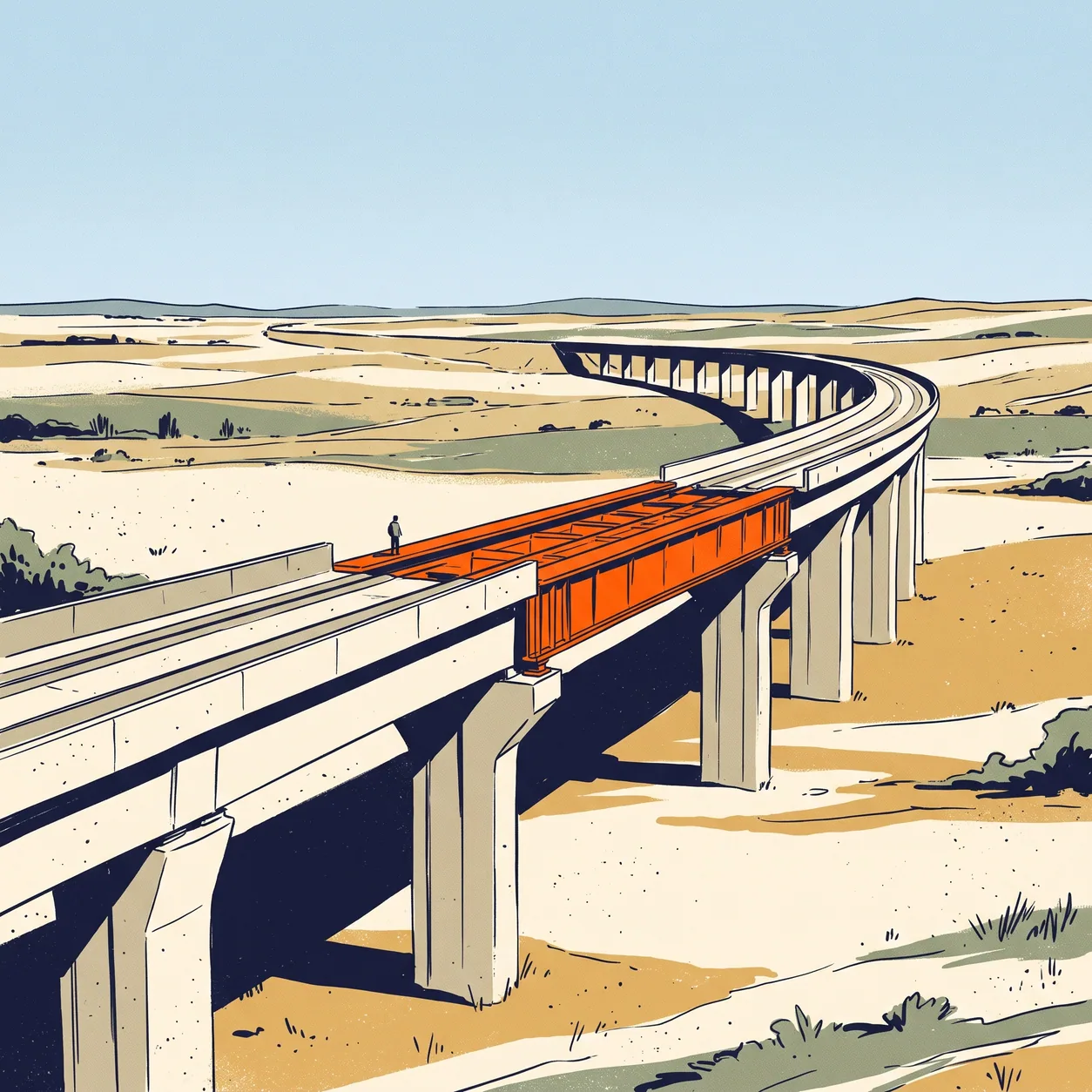
Recommitting to a complex engineering project after severe delays and financial overruns can require fundamental shifts in governance rather than simple persistence. When sprawling initiatives encounter systemic friction, decision-makers may struggle to balance accumulated sunk costs against long-term operational value. Navigating such challenges might demand a willingness to restructure administrative oversight rather than relying solely on existing frameworks. Wikipedia's current-events log recorded that UK Prime Minister Boris Johnson approved the High Speed 2 railway project, after many delays and the project going billions of pounds overbudget.
Why Dedicated Oversight May Be Necessary for Large Systems
Prime Minister Boris Johnson made a statement to the House of Commons on transport infrastructure. In the statement, Prime Minister Boris Johnson stated that he will be appointing a Minister whose full-time job will be to oversee the project. Assigning a dedicated leadership role can perhaps help restore accountability when complex, multi-tiered organizations face persistent delays. Without focused executive oversight, strategic focus might easily become diluted across competing institutional interests. Structural reorganization could also serve as an essential step toward separating high-level alignment from day-to-day operational execution.
Balancing Operational Utility Against Execution Friction
In the same statement, Prime Minister Boris Johnson announced that passengers arriving at Birmingham Airport will be able to get to central London by train in 38 minutes. Highlighting explicit end-user metrics, such as reduced travel times, could offer a tangible standard for evaluating ultimate project value against rising costs. However, establishing ambitious efficiency targets might also increase technical pressure during implementation. Large-scale developments can often represent a delicate balancing act between promised public benefits and resource expenditures. Engineering leaders might find that framing goals around direct user outcomes helps maintain focus when external pressures mount.
Ultimately, system builders can arguably learn that renewing a delayed project might only succeed if organizational governance adapts alongside capital investments. Simply reaffirming commitment without structural changes may fail to address the root causes of systemic delays. Long-term execution success might rely far less on initial project authorization and more on continuous, tailored governance discipline.
Sources
- Portal:Current events/2020 February 11 (revision 940551688) - Wikipedia, 2020-02-13
- PM statement on transport infrastructure: 11 February 2020 - GOV.UK - Prime Minister's Office, 10 Downing Street, 2020-02-11