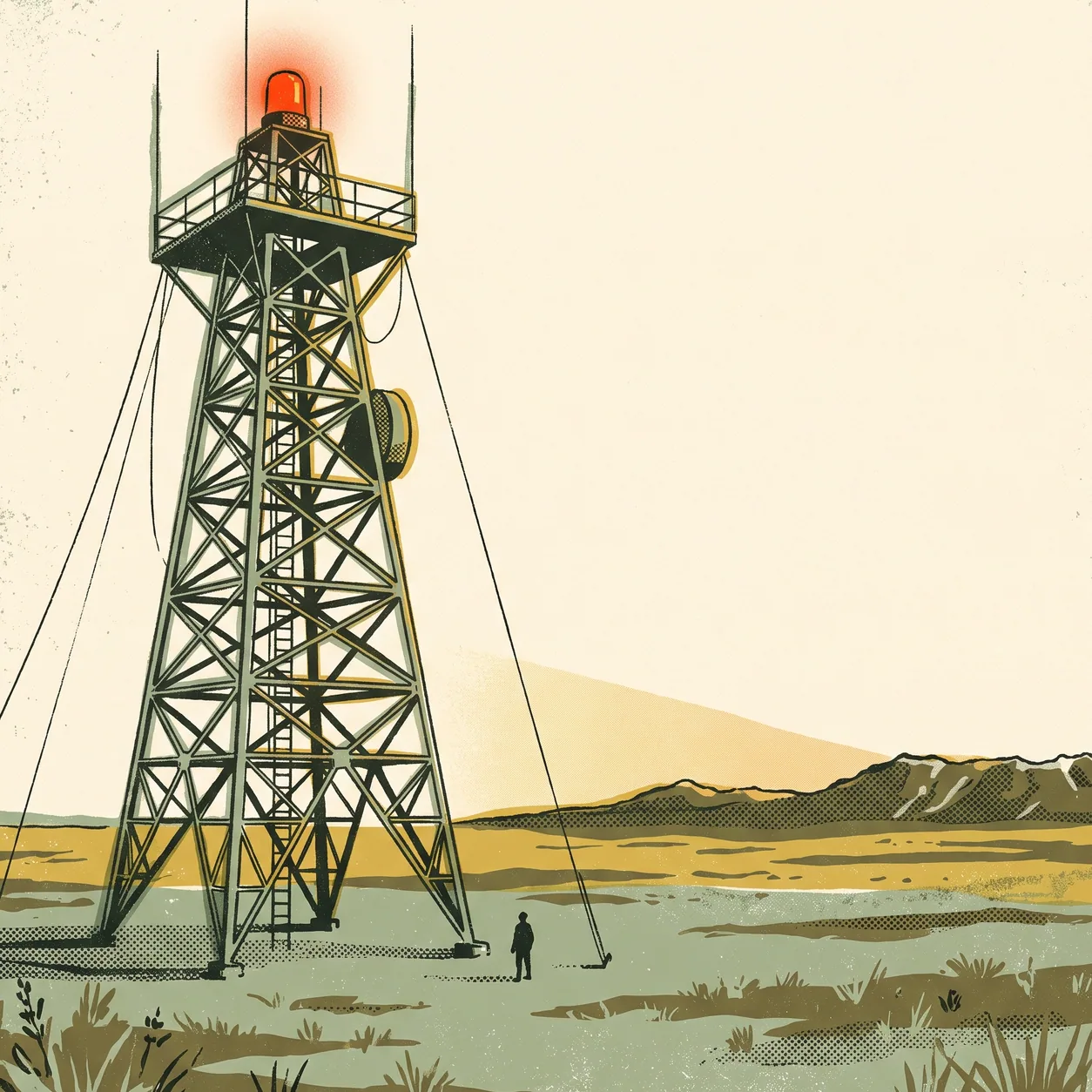
Whoever controls a broadcast channel may shape what many people see and hear. In a moment of upheaval, that channel can become a focus of attention.
Wikipedia's current events log for April 7, 2010, recorded that protesters seized the state television channel building in the capital, Bishkek. The log noted that Kyrgyz opposition representatives and human rights activists appeared on the TV channel KTR, which resumed broadcasting after one hour.
The Architecture of Influence
One reading of this sequence is that influence may depend on distribution. A movement might have momentum, but without a way to broadcast, its reach could stay local.
In the log's account, KTR resumed broadcasting after one hour, with opposition representatives and human rights activists appearing on it. In general, a pause and resumption like this can signal a change in who is addressing the wider audience, and might turn a local action into a wider event.
Securing the Transmission Node
For anyone studying such shifts, one possible lesson concerns where effort goes. A central channel may offer reach that is hard to gain any other way.
In fast-moving situations, the message itself may matter less at first than access to the channel that carries it.
Perhaps change depends as much on reaching people as on the events themselves.
Sources
- Portal:Current events/2010 April 7 (revision 355090368) - Wikipedia, 2010-04-10T06:04:19Z.