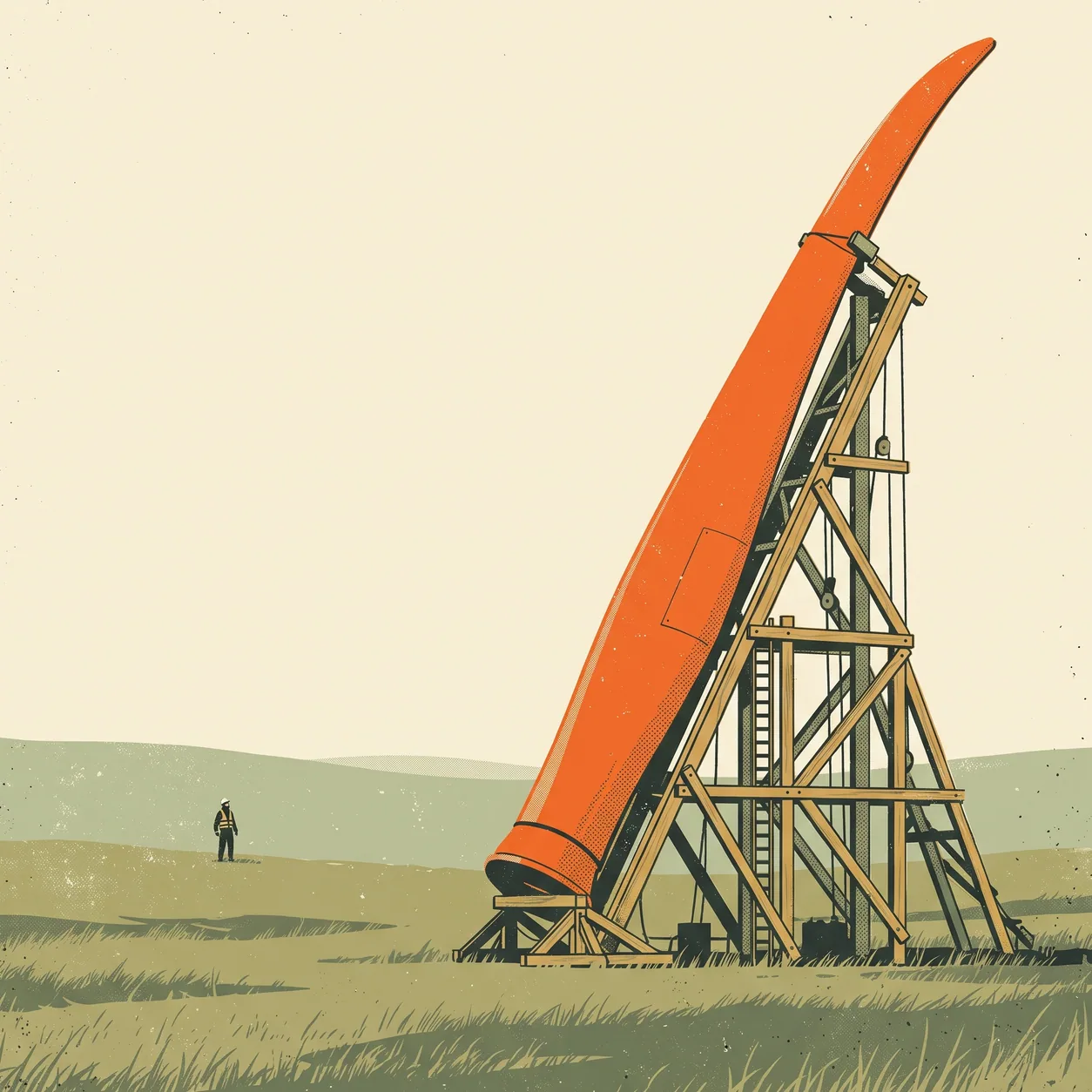
Initial prototypes often require enormous investments to prove a single technical concept. Such early builds may exist primarily to demonstrate technical feasibility rather than immediate economic viability. When a process moves out of pure research, producing even a minimal functional prototype can demand significant resources and tailored conditions.
Wikipedia's current-events log recorded that the world's first bovine stem cells lab-grown burger was cooked and eaten at a news conference. The New York Times reported that the two-year project to make the one burger, plus extra tissue for testing, cost $325,000. The publication added that Sergey Brin, one of the founders of Google, paid for the project. According to The New York Times, about 20,000 strips were used to make the five-ounce burger, which contained breadcrumbs, salt, and some natural colorings as well.
Why expensive prototypes can clarify long-term potential
High costs at the prototype stage might reflect the initial absence of specialized supply chains or automated manufacturing tools. Early financial commitments from dedicated sponsors could help bridge the gap between abstract academic research and functional practical demonstrations. When teams assemble thousands of individual micro-structures manually, the resulting item may appear wildly impractical for standard commercial distribution. Yet, such painstaking efforts can establish whether an underlying methodology is capable of operating outside a laboratory setting.
In early-stage product engineering, initial milestones generally prioritize proof of execution over immediate cost efficiency. Demonstrating that a complex technical process can produce a complete physical output may shift public perception and encourage further venture investment. Builders who focus on achieving a working baseline might uncover specific physical or chemical constraints that only become apparent during actual assembly.
How isolated milestones might guide future engineering
A single successful build can function as a critical benchmark for long-term development efforts. Even when supplementary ingredients or processing steps remain far from ideal, a public trial might offer essential data for subsequent operational refinements. Engineering teams can then concentrate on optimizing methods, reducing production expenses, and improving output uniformity over time.
In general, pioneer prototypes may matter less for their immediate unit economics and more for reframing what is technically achievable. A working initial unit could show that an ambitious engineering concept is feasible, even if reaching commercial viability requires extensive follow-on work.
Sources
- Portal:Current events/2013 August 5 (revision 570731387) - Wikipedia, 2013-08-29
- A Lab-Grown Burger Gets a Taste Test - NYTimes.com - The New York Times, 2013-08-05