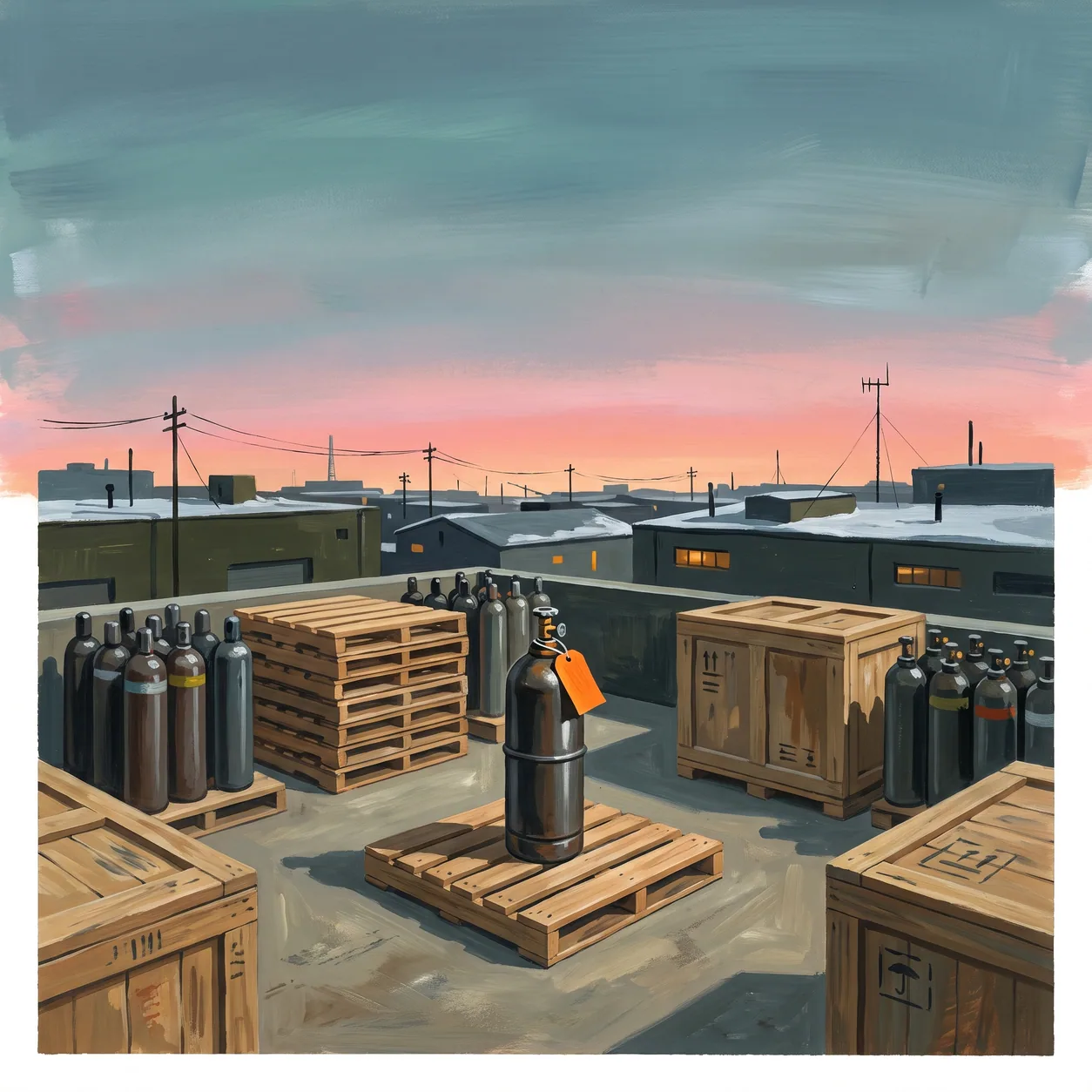
Threat models often focus on specialized, high-tech vulnerabilities while overlooking the danger of ordinary materials. True systemic risk emerges when common industrial logistics are repurposed for destructive ends, turning the tools of civic maintenance into instruments of disruption.
Wikipedia's current-events log for March 28, 2007, recorded that the U.S. military reported insurgents with two chlorine truck bombs attacked a local government building in Fallujah.
Civilian supply chains introduce systemic vulnerabilities
When adversaries utilize widely available industrial chemicals, the barrier to executing an operation shifts fundamentally. It moves away from the complex procurement of restricted, military-grade assets and toward the interception of civilian supply chains. This dynamic forces a reevaluation of how security is managed across open, functioning environments where commerce must continue.
Defending against this type of tactic requires more than just reinforcing a physical perimeter around a target. It demands a comprehensive understanding of what materials flow through a region on a daily basis. If a substance has a legitimate, widespread commercial use, such as water purification or manufacturing, restricting it entirely is impossible without halting essential civic functions. The vulnerability is baked into the necessity of the material itself.
Dynamic observation must replace static defense
Security frameworks must therefore evolve to monitor the dual-use potential of everyday commodities. The primary challenge lies in identifying anomalies in standard distribution networks before those materials can be redirected toward a target. This requires a shift from static, reactive defense to dynamic, intelligence-driven observation of logistical chains.
The adaptation of common resources into tools of disruption highlights a core principle in asymmetric conflict: an opponent will consistently bypass heavily guarded conventional channels in favor of exploiting the unprotected mundane. Recognizing this pattern is critical for anyone designing robust systems, whether in physical security, digital networks, or organizational resilience. A system is only as secure as the most easily weaponized component in its supply chain.
Effective defense is not merely about stopping specialized threats; it is about anticipating how the ordinary components of a functioning society might be turned against it.
Sources
- Portal:Current events/2007 March 28 (revision 118937504) - Wikipedia, 2007-03-30