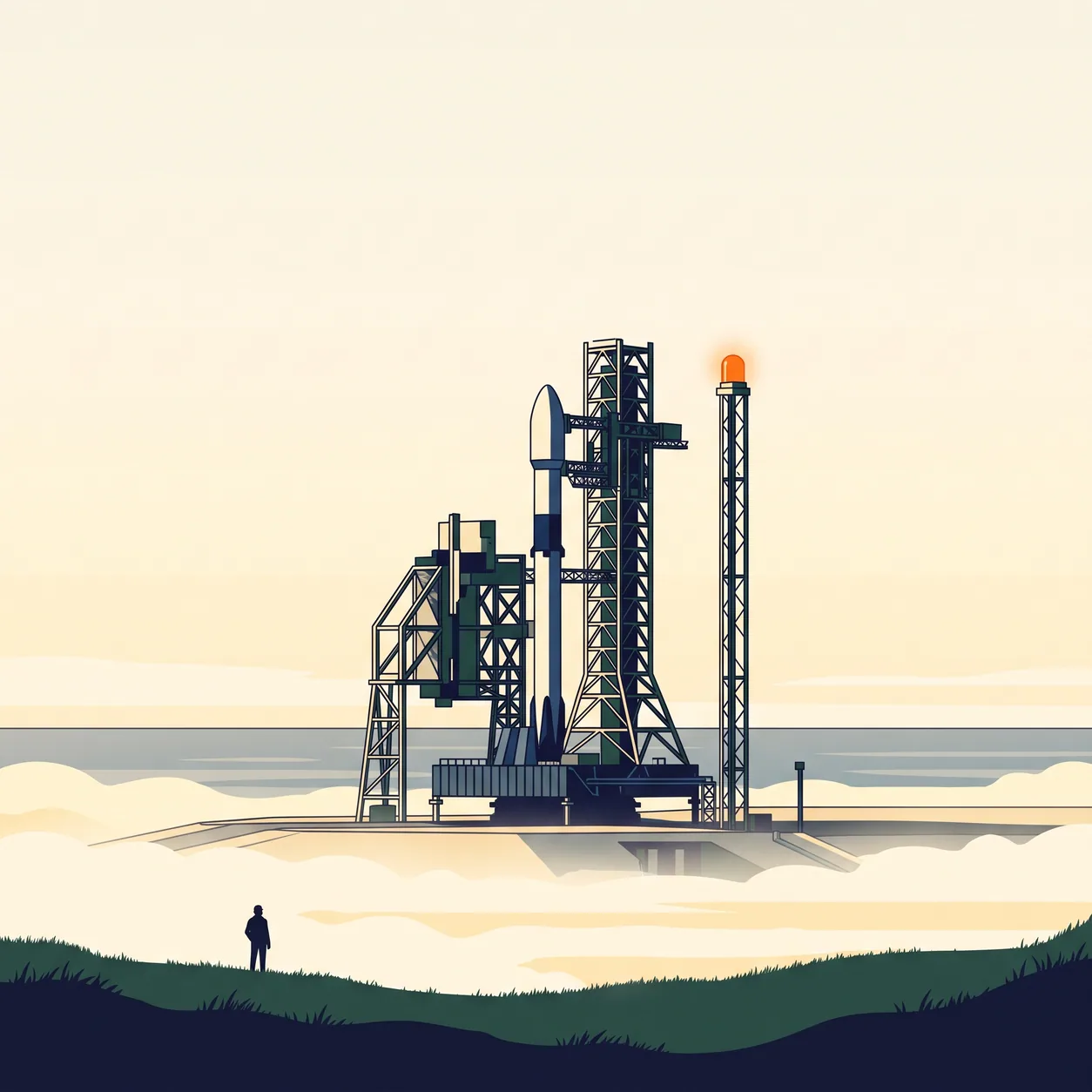
Automated safety checks may help prevent catastrophic failures by halting operations at the first sign of an anomaly. When a system detects an unexpected condition during execution, interrupting a sequence early might offer a far better path forward than pushing through uncertainty.
Wikipedia's current-events log for February 17, 2023, recorded that JAXA aborted the first launch attempt of the H3 rocket after some of its boosters failed to ignite during the first stage. Wikipedia's log added that the launch attempt was Japan's second failed rocket launch since 2003. The Japan Aerospace Exploration Agency (JAXA) stated that it had scheduled the launch of the first H3 Launch Vehicle (H3 TF1: Test Flight No.1). According to JAXA, an anomaly was found in the first stage system during automatic countdown operations, and ignition signals for SRB-3s were not sent.
Why automated aborts might safeguard complex builds
In complex engineering environments, setting up automated safeguards may help ensure that an execution sequence stops before damage occurs. An automated abort mechanism might be perceived as an immediate disappointment on launch day, yet it could actually represent a sound system design. When internal monitors detect anomalies during automated sequences, withholding critical ignition commands may preserve essential hardware and help prevent catastrophic destruction. Engineering teams building mission-critical platforms may benefit from designing systems that default to safety whenever initial parameters fall outside expected ranges. Software controls that pause operations might ultimately protect both physical assets and long-term project timelines.
How unexpected stops can provide critical diagnostic windows
When a high-stakes deployment halts unexpectedly, operational teams may gain a valuable chance to analyze telemetry instead of managing total failure. Interrupting a process before secondary boosters or main engines fully activate may help keep expensive instruments completely intact. In general, a forced operational pause might yield crucial diagnostic data that may clarify hidden software edge cases or sensor inconsistencies. Teams that prioritize early safety holds might find that temporary delays can ultimately lead to more dependable future launches. Careful troubleshooting during an unexpected hold may also reveal underlying design risks that might otherwise go unnoticed.
A planned abort might be a vital tool for long-term system resilience.
Sources
- Portal:Current events/2023 February 17 (revision 1141291402) - Wikipedia, February 24, 2023
- JAXA | Cancellation of Today's Launch of the First H3 Launch Vehicle Carrying Advanced Land Observing Satellite-3 “DAICHI-3” (ALOS-3) - JAXA, February 17, 2023