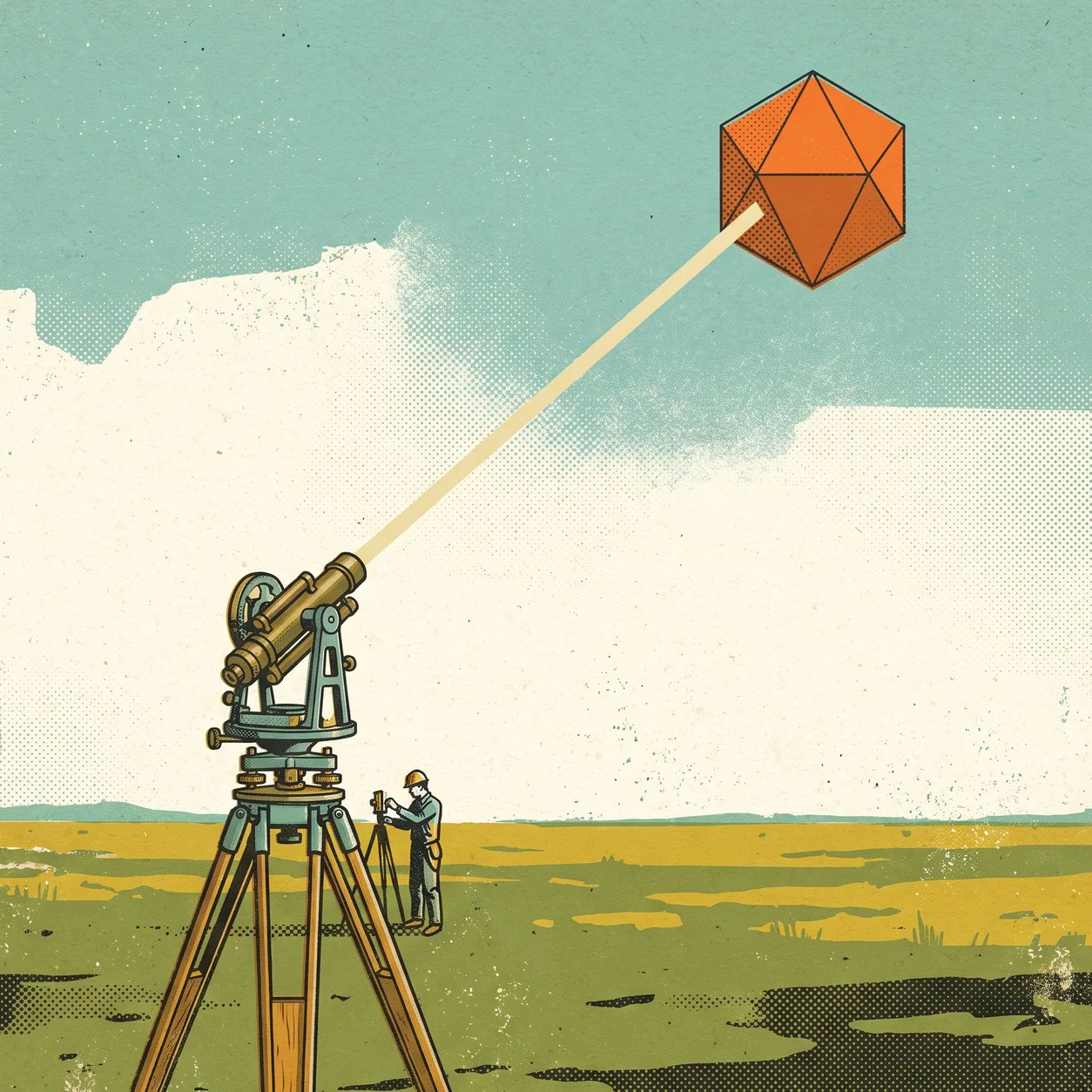
Systems often contain hidden elements that remain invisible precisely because they are stable. Finding them requires deploying specialized tools to look at familiar spaces in new ways.
Wikipedia's current-events portal for July 28, 2011, recorded that astronomers using the Wide-field Infrared Survey Explorer telescope identified a Trojan asteroid. The entry added that the rock poses no danger to the Earth since it sits in what is termed a gravitational "sweet spot".
Why Stability Obscures Observation
When a component operates in a state of equilibrium, it might rarely trigger alarms or demand immediate attention. In complex architectures, whether mechanical, organizational, or digital, operators often focus their diagnostic efforts on anomalies, friction, and active threats. An entity resting perfectly within a system's natural balance may go entirely unnoticed for long periods, simply because it does not disrupt the surrounding environment. One reading is that stability itself can act as a form of camouflage.
Deploying a new observational instrument can change the baseline of what is seen. A different logging metric or a fresh analytical framework might suddenly illuminate objects that were always present but previously invisible. The challenge for system architects is perhaps not merely scanning for immediate danger, but mapping the operational environment completely to understand its true capacity. Relying only on error reports or crisis metrics might leave a vast portion of the operational landscape uncharted.
Mapping the Complete Environment
Understanding the full inventory of a system may allow for better long-term planning. Even if a newly discovered element presents no immediate risk, its presence might alter the foundational map of available resources and structural constraints. Builders might consider what else resides in the quiet zones of their own projects. Unexamined processes, legacy code, or quiet market segments often occupy similar spaces of equilibrium, waiting for the right lens to reveal them.
True visibility means mapping the quiet spaces just as rigorously as the volatile ones.
Sources
- Portal:Current events/2011 July 28 (revision 442008147) - Wikipedia, 2011-07-29T08:48:12Z