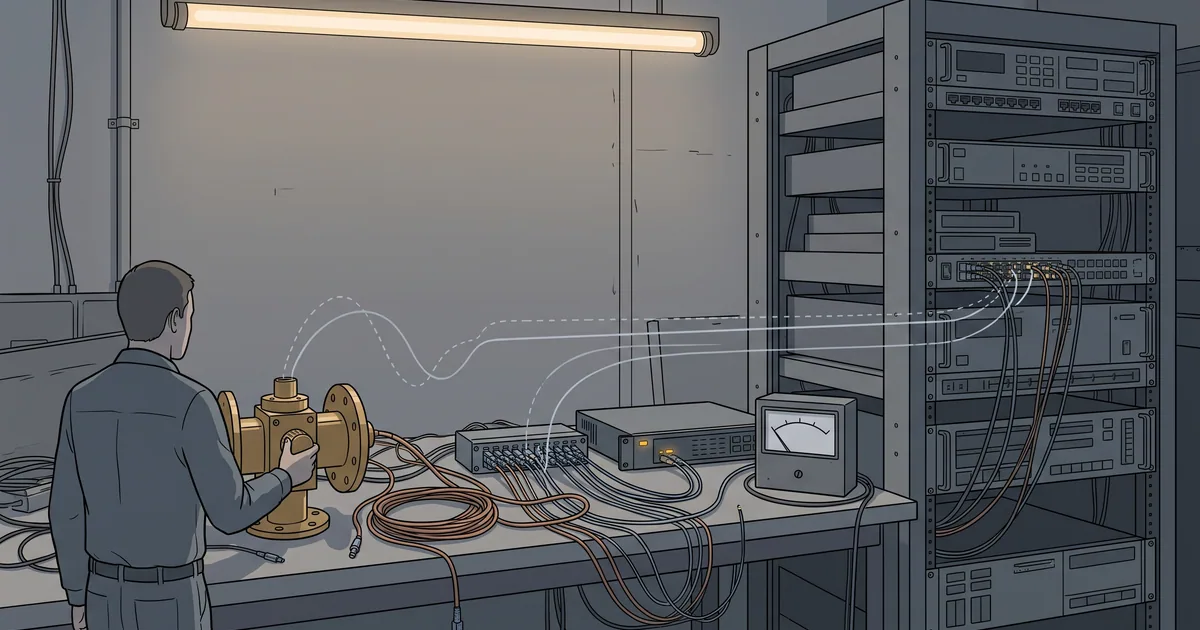
During October 2012, fixed wireless operators face severe capacity collapses across millimeter-wave and microwave links as autumn storms bring heavy localized precipitation. When modern split-mount radios engage adaptive coding and modulation (ACM), physical Ethernet link interfaces stay continuously up, blinding interior gateway protocols to the loss of raw transit bandwidth. Research published by IEEE in October 2012 demonstrates that conventional static OSPF routing metrics fail when link capacity fluctuates underneath an active adjacency. Network engineers must confront an operational dilemma: How can a wireless ISP shift traffic smoothly from a rain-degraded microwave backhaul onto a secondary fiber or lower-band path before packet loss spikes?
Why does interface link-state remain up even when rain fade drops microwave capacity by eighty percent?
Adapting OSPF routing metrics dynamically based on path performance is critical in October 2012 networks to avoid severe traffic loss when degraded wireless backhauls maintain link state but lose throughput capacity. Characterizing rain fade duration and time-series attenuation is vital for telecommunications operators seeking to maintain carrier-grade backhaul availability through timely failover mechanisms. Simulation of rain attenuation time series shows rapid signal degradation that warrants OSPF multipath cost adjustments before link interfaces register hard physical down events. Worst-month empirical measurements of high-frequency microwave propagation at 26 GHz indicate severe fading depths that exceed static fade margins during localized convective rain events. Statistical hitting-time distributions for rain attenuation provide predictive thresholds that enable fade mitigation techniques to initiate path switching prior to complete link outage. Consequently, high-frequency microwave backhaul links subjected to heavy rain fade require automated routing metric re-weighting to divert transit flows to alternate fiber or lower-band routes without relying on interface down traps. A standard Gigabit Ethernet connection between an outdoor radio unit and an indoor routing switch operates at a constant 1000BASE-T or 1000BASE-SX physical link rate regardless of radio frequency conditions across the air. When heavy downpours attenuate an 18 GHz or 24 GHz link, the radio modem preserves carrier lock by dynamically stepping down its modulation profile from 256-QAM to 16-QAM or QPSK. While this adaptive coding and modulation mechanism prevents a complete loss of frame synchronization, it simultaneously shrinks the wireless payload capacity from 360 Mbps to 40 Mbps, representing an eighty to ninety percent bandwidth collapse. Because the Ethernet copper or fiber handoff between the radio indoor unit (IDU) and the router never drops carrier, standard Open Shortest Path First (OSPF) hello packets continue traversing the link and the static OSPF interface cost remains unchanged. Unaware that the pipe has constricted tenfold, the router continues forwarding 300 Mbps of aggregate subscriber traffic into the microwave port, causing immediate egress buffer saturation, tail-drop packet loss, and TCP session collapse.
How do Bidirectional Forwarding Detection and capacity-aware OSPF cost adjustments shift traffic proactively?
To establish proactive diversion boundaries, operators must decouple fast link-failure detection from capacity-degradation routing. Bidirectional Forwarding Detection (BFD, RFC 5880) exchanges lightweight sub-second keepalives every 50 milliseconds, triggering an immediate OSPF adjacency teardown within 150 milliseconds if a catastrophic equipment fault or deep rain cell severs the microwave carrier completely. However, because tiny BFD control packets often slip through a 40 Mbps QPSK modulation floor without dropping, BFD alone cannot protect against partial rain-fade congestion. Engineers bridge this control-plane gap by coupling radio telemetry directly to dynamic OSPF metric scripts or Ethernet Connectivity Fault Management (IEEE 802.1ag / ITU-T Y.1731) bandwidth notification frames. By polling the microwave IDU via SNMP every few seconds for instantaneous Received Signal Level (RSL), signal-to-noise ratio (SNR), and active modulation state, an automation daemon on the router monitors real-time air capacity. When rain attenuation drives the radio below 64-QAM (dropping capacity below a defined threshold such as 150 Mbps), the script automatically raises the primary microwave interface's OSPF cost from 10 to 500. This metric update floods a Router Link State Advertisement (LSA) across the area, prompting neighboring routers to recompute Dijkstra's Shortest Path First (SPF) tree and seamlessly shift bulk traffic onto a leased terrestrial fiber circuit or a rain-resilient 5 GHz / 11 GHz backup link before packet queues overflow.
Why is hold-down hysteresis essential to prevent route oscillation during passing storm cells?
Implementing hold-down hysteresis is essential to prevent rapid route flapping as convective rain cells sweep past wireless towers. Empirical rain-fade time-series and hitting-time studies demonstrate that microwave signal levels fluctuate sharply from second to second during squall lines, which will induce destructive OSPF SPF recalculation storms and out-of-order packet delivery if routing metrics revert immediately upon brief signal spikes. Operators must enforce an asymmetric dampening policy: fast cost elevation (within 3 to 5 seconds of modulation drop) paired with a strict hold-down stabilization timer requiring five to ten minutes of sustained 256-QAM lock and healthy fade margin before restoring the nominal OSPF cost of 10. As of October 31, 2012, combining BFD sub-second hard-fault detection, modulation-driven OSPF cost tuning, and hold-down hysteresis remains the definitive architecture for hitless microwave-to-fiber backhaul failover.
Sources
- IEEE: A Multipath Routing Algorithm Based on OSPF Routing Protocol, 2012-10-08
- IEEE: Simulation of rain attenuation time series and fade duration statistic, 2012-10-11
- IEEE: Analyses of worst-month rain fade statistics for Ku-band (26GHz) in the tropics, 2012-10-14
- IEEE: Rain attenuation hitting time statistical distribution: Application to Fade Mitigation Techniques of Future Satellite Communication Systems, 2012-10-17