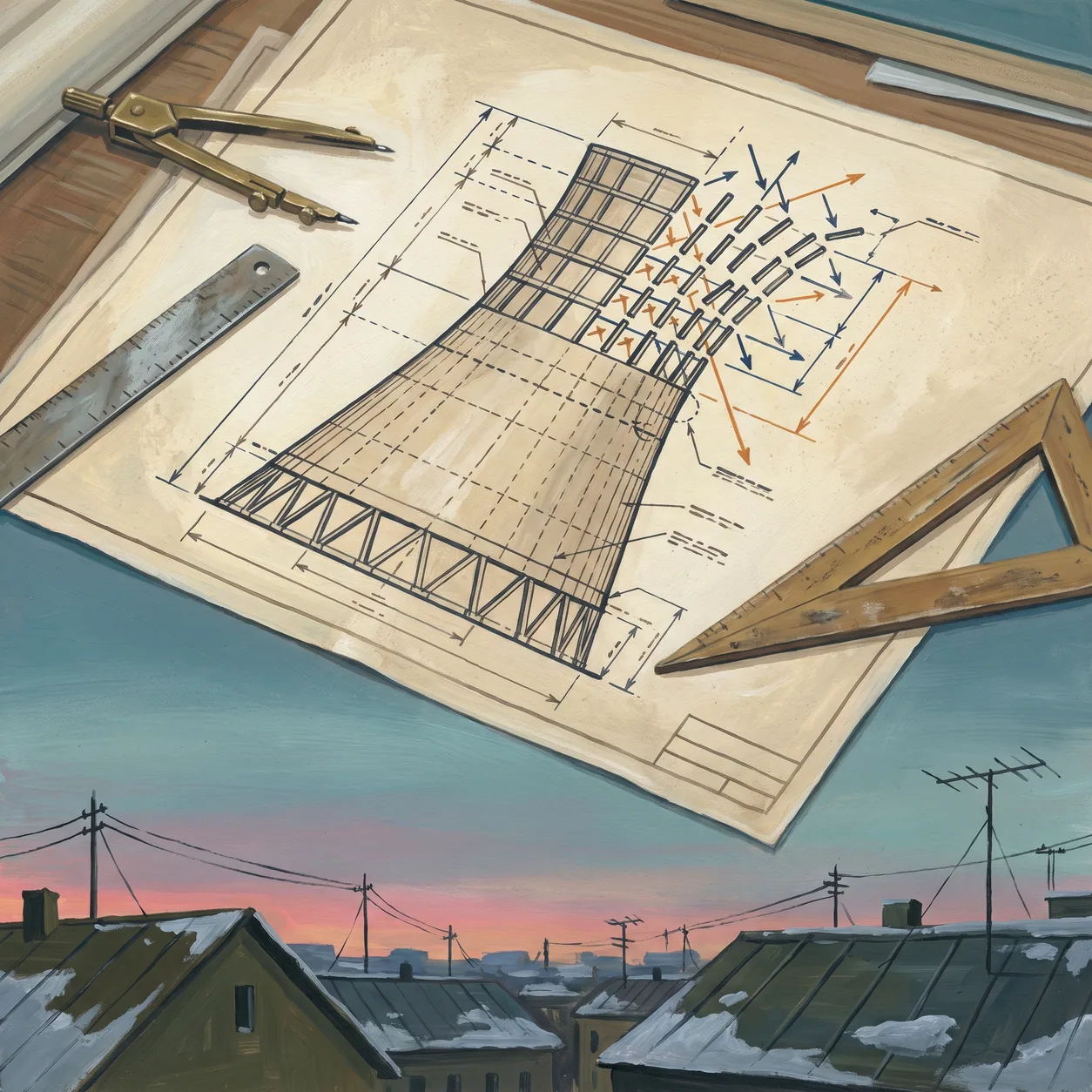
True systems thinking requires designing for the end of a lifecycle just as rigorously as the beginning. When massive infrastructure outlives its utility, walking away is rarely an option; the structure must be actively and precisely dismantled.
Wikipedia's current-events log for May 2006 recorded that the cooling tower of the Trojan Nuclear Power Plant in the U.S. state of Oregon implodes, as planned.
This represents a critical phase in large-scale execution. Building a massive structure demands coordination, resource allocation, and strict adherence to physical constraints. Bringing it down demands the exact same disciplines, applied in reverse. The psychology of building naturally favors creation over destruction, making the end-of-life phase uniquely challenging to manage.
Engineering the End State
In software and physical engineering alike, creators often focus entirely on the launch. The operational phase then receives the bulk of maintenance attention. Yet, every system eventually reaches obsolescence. A controlled collapse requires understanding the load-bearing dependencies of the original design. If those dependencies are ignored during the teardown, the resulting failure is chaotic and dangerous.
When a teardown happens exactly as intended, it is a testament to rigorous planning. The objective shifts from sustaining a load to neutralizing it safely. This requires engineers to study the architecture not to reinforce it, but to find its critical vulnerabilities and exploit them systematically.
The Discipline of Decommissioning
For builders, the lesson lies in the concept of a planned end state. Whether decommissioning legacy codebases, sunsetting a product line, or removing physical infrastructure, the removal process is a project unto itself. It requires dedicated resources, risk assessment, and precise timing.
Leaving obsolete systems standing incurs ongoing costs and risks. It creates technical debt in software and physical hazards in the real world. Actively dismantling these remnants clears the way for new development, but only if the removal is executed with deliberate control.
The final test of a well-managed system is not how long it stands, but how cleanly it can be brought down.
Sources
- Portal:Current events/May 2006 (revision 56227326) - Wikipedia, 2006-05-31T23:59:38Z.