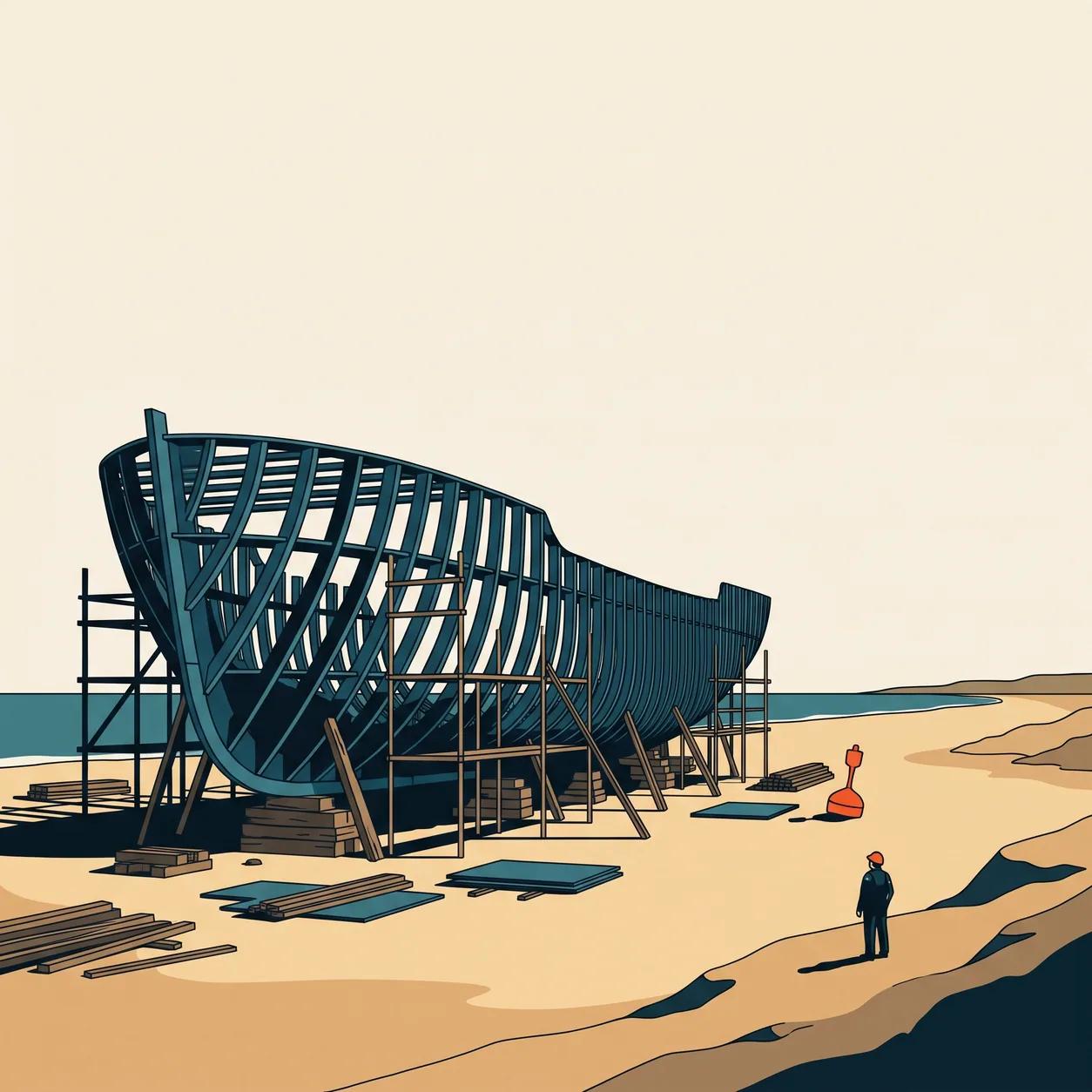
Building national capacity in heavily physical industries often requires much more than top-level administrative redesigns. While central organizations can effectively focus institutional attention, practical capability typically depends on the underlying resilience of domestic supply chains, trained labor force development, and steady operational execution over extended periods. Structural deficits in physical sectors may take time to address, perhaps regardless of how quickly governance frameworks are established.
Centralized policy initiatives might signal shifting strategic priorities when international competition grows more intense. Wikipedia's current-events log for March 4, 2025, recorded that U.S. President Donald Trump announced the creation of the Office of Shipbuilding as means to compete with China in the maritime transport industry.
Administrative mandates versus practical capacity
In complex industrial sectors, creating a dedicated central office might represent a helpful starting point for high-level alignment, but it may not automatically resolve deep-seated manufacturing challenges. Restoring competitive positions in global logistics or heavy construction might demand many years of sustained investment across component manufacturing, regional supplier ecosystems, and specialized technical expertise. Strategic planning can clarify policy intent, but ultimate competitiveness might depend on whether actual capital and human resources reach operational shipyards and production plants.
When competing against well-established global players with massive existing infrastructure, targeted administrative moves might need to be supported by comprehensive ecosystem development. Industrial strength might expand through incremental steps, where consistent operational investments could gradually aggregate into broader capability. Top-level systemic initiatives often require substantial patience from leadership, as tangible physical outputs tend to follow behind policy declarations by significant timeframes.
How systemic focus might shape long-term execution
For operators and leaders managing complex initiatives, organizational announcements can perhaps be best understood not as completed solutions, but as initial signals for broader execution. Long-term progress in heavy industry might rely less on administrative restructuring and far more on daily execution across the physical supply network. Maintaining momentum may require aligning long-range capital commitments with ground-level technical requirements.
A strategic announcement can provide an initial framework, but long-term capability may ultimately rest on the continuous, quiet work of physical execution.
Sources
- Portal:Current events/2025 March 4 (revision 1279149783) - Wikipedia, March 6, 2025