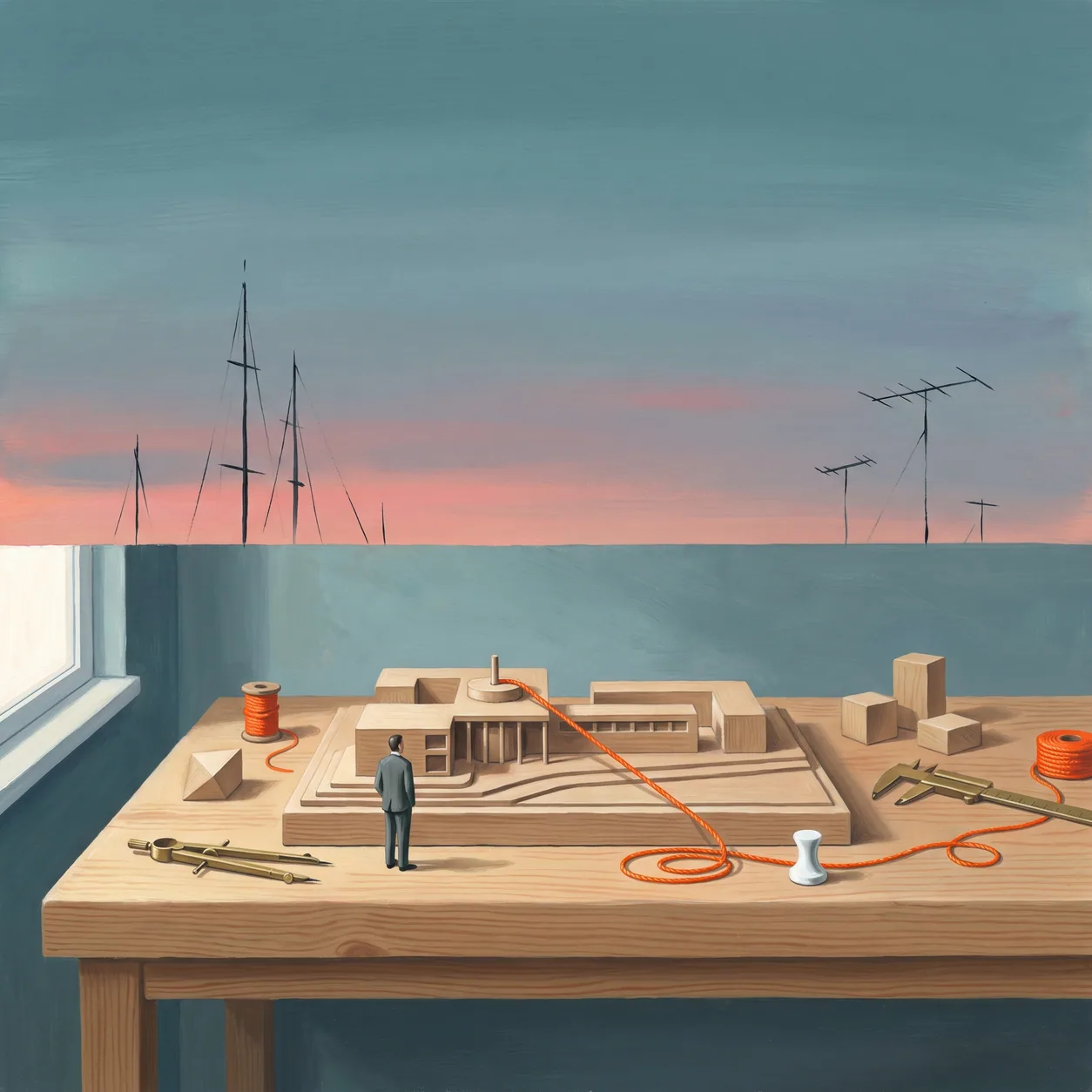
Altering an established structure often displaces friction rather than resolving it. A removal can close one dispute and open another.
Wikipedia's current-events log for May 15, 2007, recorded that Danish protesters clash with police in Copenhagen with the Little Mermaid being doused with red paint. The log noted that the clashes followed the demolition of a building in the Freetown Christiania district.
The Displacement of Friction
One way to read a sequence like this is that tension can outlast the thing it was about. In complex environments, removing a node simply forces the network to route its feedback through a different channel. The friction does not disappear; it merely changes form and location.
This dynamic applies broadly to how systems absorb sudden change. When a structural element is dismantled, the reaction may not stay confined to the original site. The log places the two events side by side; it does not say why the statue was painted, and this article does not assume a reason.
Designing for Systemic Reactions
Builders and decision-makers frequently treat structural changes as isolated events. The assumption is that clearing a space or removing a feature concludes the interaction. Yet, systems operate continuously. The energy generated by a removal must go somewhere. If a controlled outlet is not provided, the system will select its own, often optimizing for disruption.
Understanding this requires viewing environments not as collections of independent parts, but as interconnected webs where an action in one sector can prompt a reaction in another.
True execution requires mapping not just what is being removed, but where the displaced energy may land.
Sources
- Portal:Current events/2007 May 15 (revision 134010272) - Wikipedia, 2007-05-28.