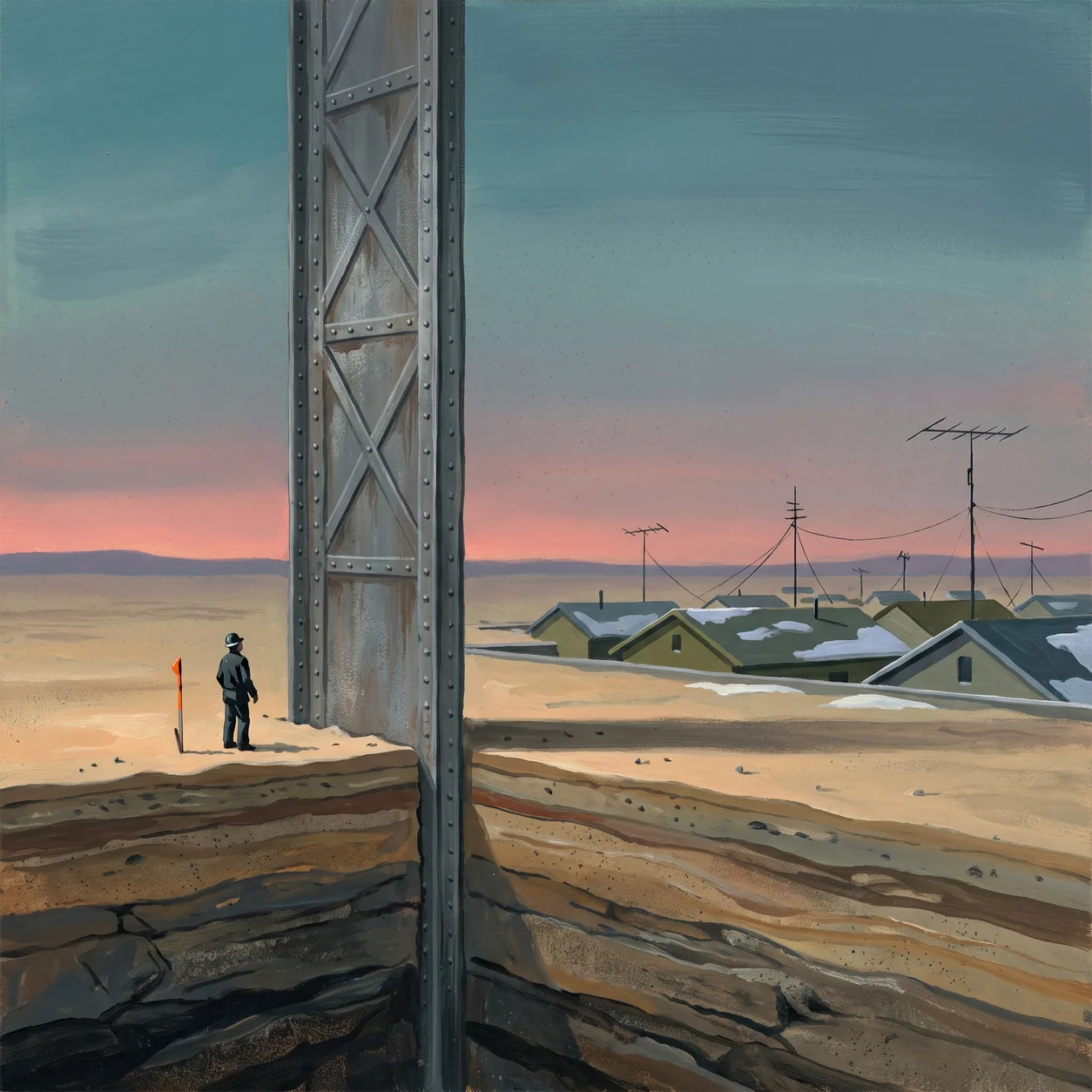
Some boundaries are drawn on maps; others are built. One recent report described a barrier built partly below ground.
In December 2009, Wikipedia's current-events log recorded that it was revealed Egypt is building an iron wall up to 100 feet deep along its border with Gaza. BBC News reported a different depth: that when it is finished the wall will be 10-11km (6-7 miles) long and will extend 18 metres below the surface.
The Material Cost of Control
BBC News also reported that the wall will take 18 months to complete. According to BBC News, intelligence sources in Egypt claim that 4km of the wall has already been completed north of the Rafah crossing, with work now beginning to the south.
This piece does not go into the reasons given for the wall. The two reported depths also differ, which is a reminder that early reports of large projects may not agree. In general terms, a barrier that extends below ground may be a costly undertaking.
Expanding the Perimeter
For people who build large structures, one possible lesson is that a boundary can be a physical object that takes time, materials and upkeep, not only a line on a map. Projects of this kind may also be hard to assess from early reports alone.
Perhaps a boundary is easier to draw than to build.
Sources
- Portal:Current events/2009 December 10 (revision 331209169) - Wikipedia, 2009-12-12.
- BBC News - Egypt starts building steel wall on Gaza Strip border - BBC News, 2009-12-09.