Seabeds might sometimes preserve historical traces long after land-based ones disappear. Uncovering such hidden structures might depend heavily on bridging gaps between specialized technical disciplines that rarely collaborate.
Wikipedia's current-events log recorded that an over 10,000-years-old underwater structure from the Stone Age was discovered in the Bay of Mecklenburg, in the Baltic Sea. Wikipedia's current-events log recorded that the kilometer long stone wall might be the oldest man-made structure on earth. A study stated that Baltic Sea basins, some of which only submerged in the mid-Holocene, preserve Stone Age structures that did not survive on land.
How Cross-Disciplinary Methods Can Uncover Submerged Evidence
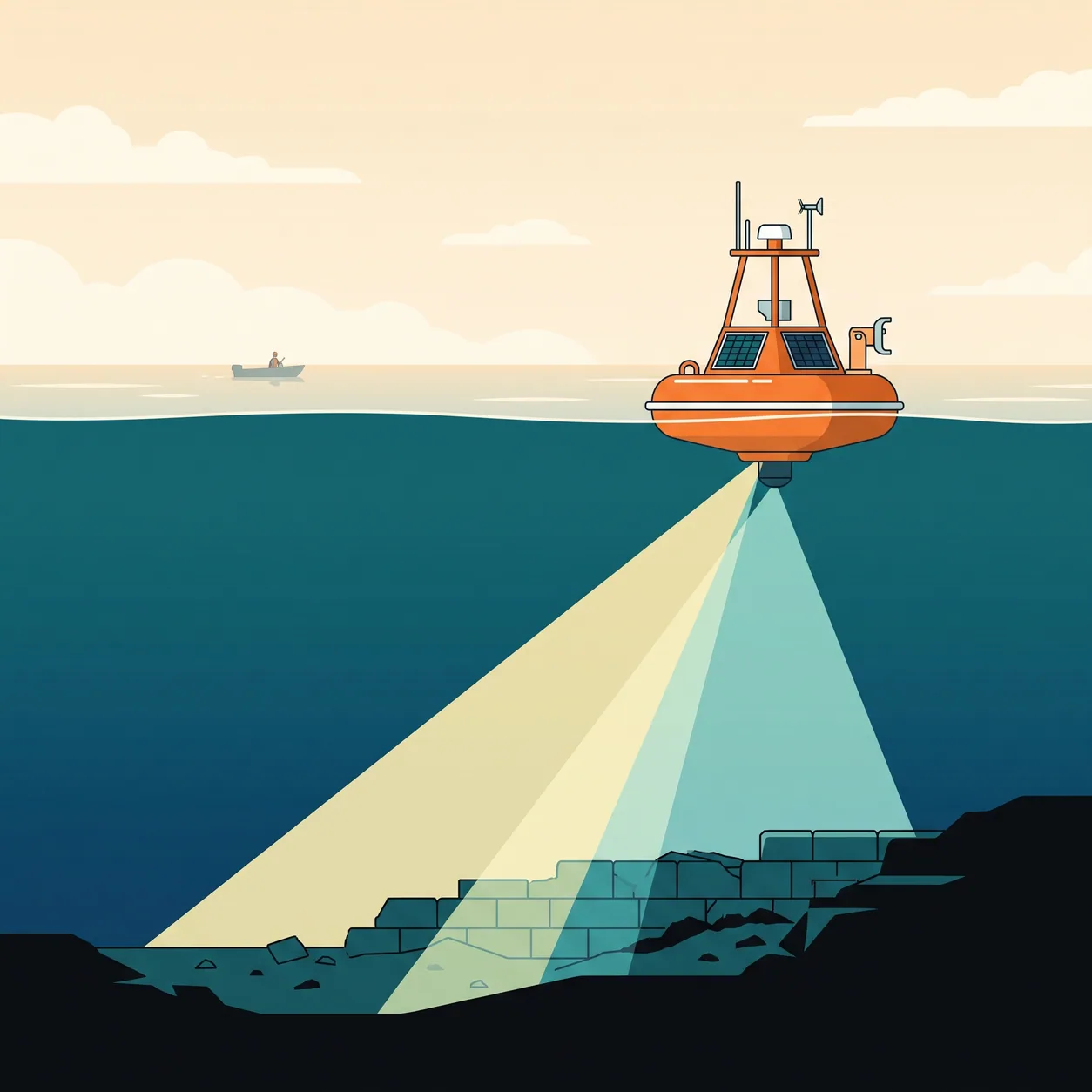
The PNAS study stated that the discovery of such submerged Stone Age features is challenging and requires cross-disciplinary approaches between archeology and marine geosciences. The authors wrote that they combined shipborne and autonomous underwater vehicle hydroacoustic data with up to a centimeter range resolution, among other methods.
Such cross-domain efforts can illustrate how advanced sensory equipment might resolve ambiguity in obscured environments. When operators blend high-resolution mapping tools with direct physical sampling, they can potentially identify cohesive structures that standard observational models might classify as background noise.
Why High-Resolution Mapping Might Reshape System Analysis
In general, relying on a single diagnostic instrument could restrict visibility when evaluating complex physical spaces. Deploying autonomous tools alongside fine-grained hydroacoustic collection might enable investigators to uncover systemic patterns that would otherwise remain undetected. Combining specialized perspectives might help turn raw sensory inputs into usable structural maps.
This approach suggests that preserved artifacts may often sit just beyond the reach of single-discipline frameworks. Teams that combine distinct methods could open new lines of investigation. Rethinking how traditional fields intersect might help teams recognize long-standing evidence hidden beneath surface conditions.
Furthermore, long-term preservation might occur in unexpected conditions where natural changes protect original layouts. Analyzing these unique environments can require specialized instruments capable of capturing minute structural details.
Ultimately, discovering lost foundations might depend less on searching new territory than on measuring familiar spaces with hybrid tools.
Sources
- Portal:Current events/2024 February 14 (revision 1208812176) - Wikipedia, 2024-02-19
- A submerged Stone Age hunting architecture from the Western Baltic Sea | PNAS - Proceedings of the National Academy of Sciences, 2024-02-12