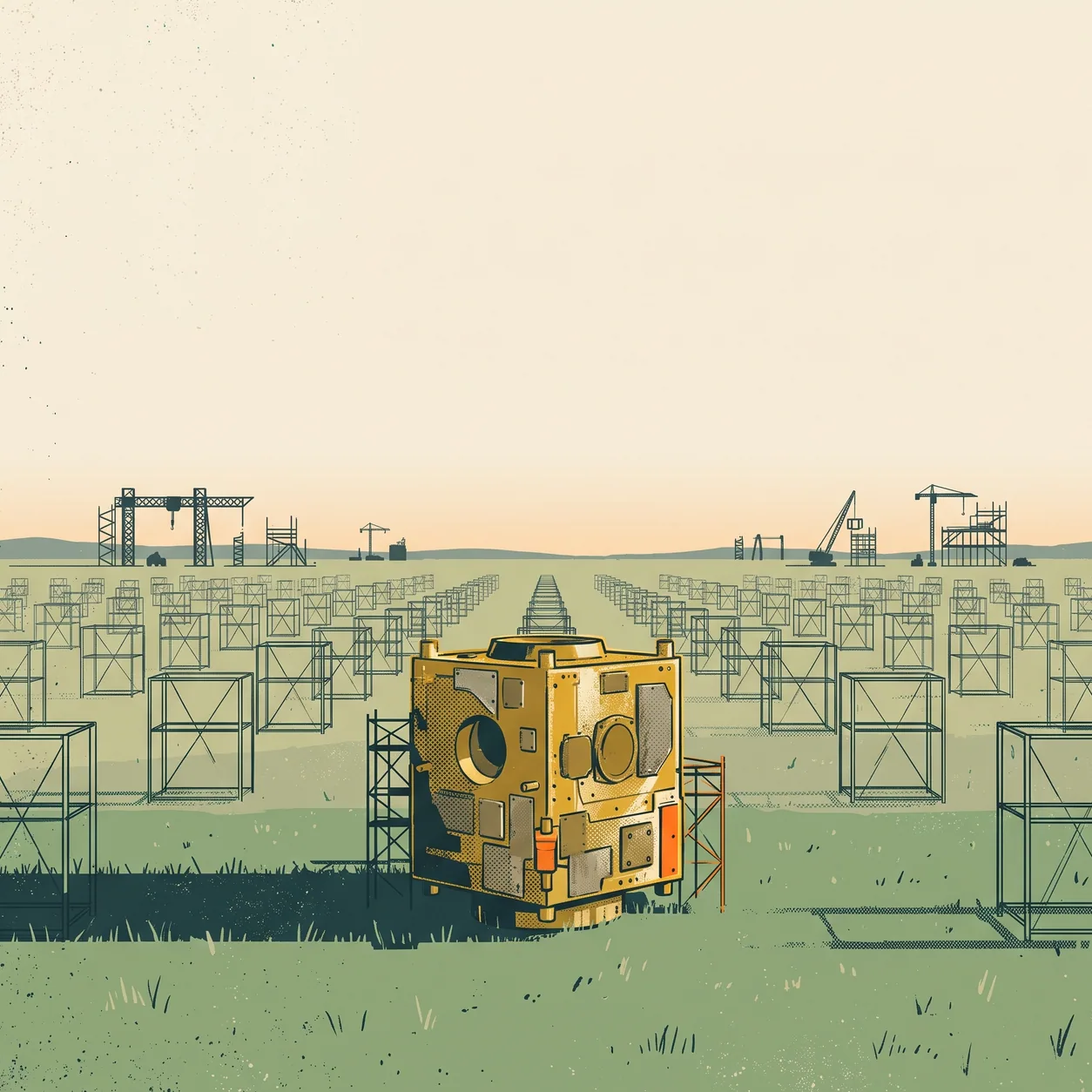
Industrial projects may often reach a critical crossroads where custom craftsmanship might need to give way to standardized industrial manufacturing. When large-scale physical infrastructure requires high output volume, traditional bespoke engineering methods can become prohibitively slow or expensive. Transitioning toward repeatable, serialized assembly lines might allow technical organizations to scale complex hardware systems at a far broader magnitude. Wikipedia's current-events log for June 16, 2015 recorded that Airbus announced plans to build 900 satellites on behalf of the OneWeb satellite constellation with the project starting in 2018.
How High-Volume Commitments Might Alter Infrastructure Planning
Large commitments can fundamentally alter how engineering leaders evaluate production risks and supply network dynamics. In traditional hardware development, early prototypes and limited runs can often be built using highly customized tooling for each iteration. However, committing to hundreds of units might force teams to adopt high-throughput assembly strategies rather than reliant boutique processes. This practical shift could encourage modular component designs, simplified assembly steps, and improved long-term procurement efficiency.
Furthermore, signaling multi-year operational timelines far in advance may help harmonize capital investments across partner networks and suppliers. When component suppliers gain early visibility into anticipated build volumes, they might invest sooner in dedicated facilities and automated tooling. Such structured alignment could potentially eliminate predictable manufacturing bottlenecks well before physical assembly begins on the shop floor.
Why Standardized Assembly May Lower Risk in Complex Systems
Embracing standardization across high-volume hardware projects might also transform how quality control and defect prevention are managed. When producing complex technical equipment in large numbers, identifying and correcting minor design flaws early can be far more vital than in small-scale builds. A single undetected flaw might propagate across dozens or hundreds of units, potentially leading to costly systemic re-engineering.
Consequently, executing at scale may require rigorous process discipline, standardized component testing, and highly predictable workflows. Teams that establish repeatable production standards might significantly reduce operational variance and achieve consistent system performance. Moving from individual unit customization to serialized factory execution could be an essential step for ambitious projects seeking long-term operational resilience. Ultimately, ambitious technical goals might depend less on isolated design breakthroughs and more on the sustained, disciplined execution of standardized manufacturing.
Sources
- Portal:Current events/2015 June 16 (revision 668146481) - Wikipedia, June 22, 2015.