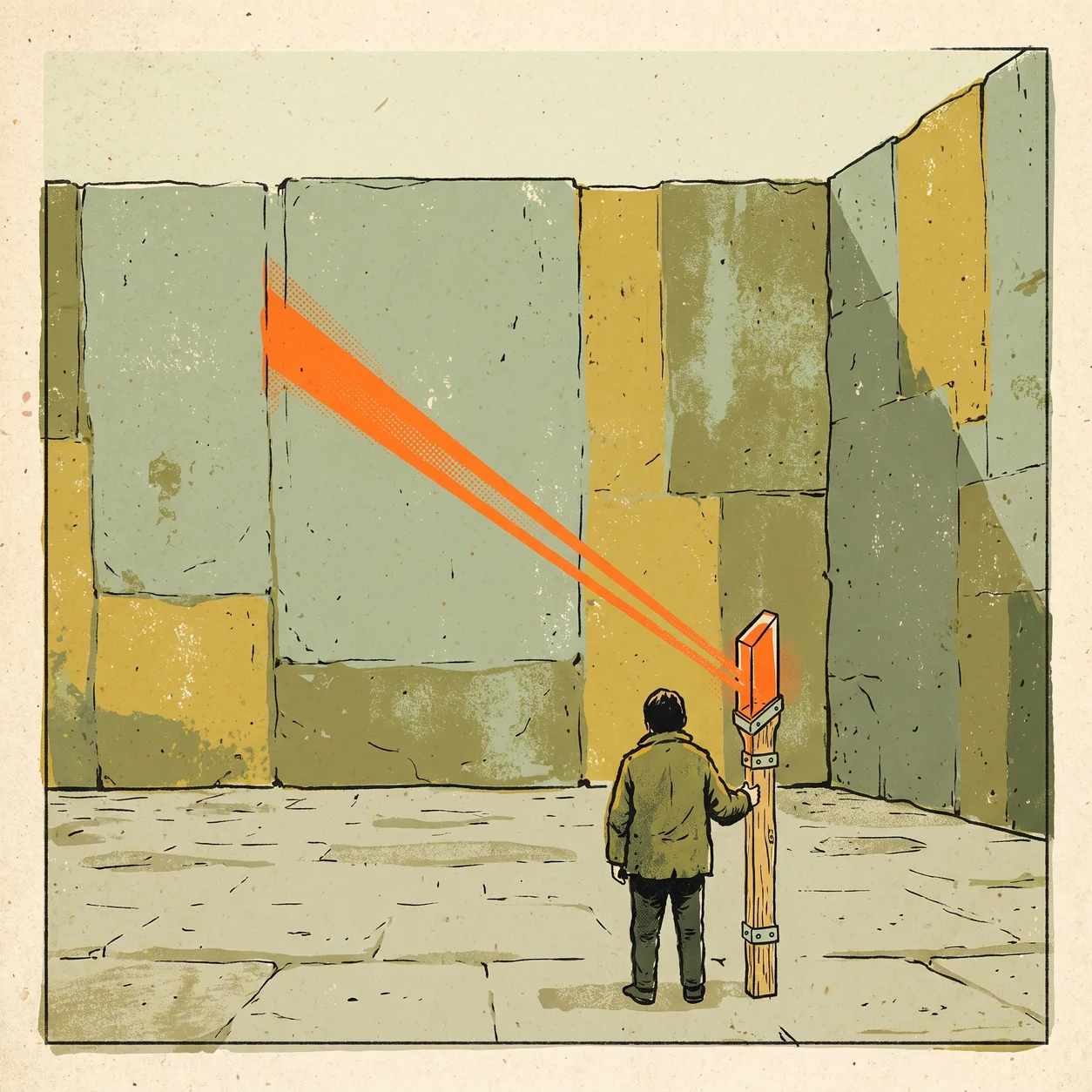
In some systems, the line between asking a question and protesting can become blurred. Where information is tightly managed, seeking answers may be treated as a challenge.
Wikipedia's current-events log for March 20, 2011, recorded that Saudi forces arrest and take away around 15 people as they gather outside the interior ministry building to request details of the whereabouts of their friends or family members who had been imprisoned without trial.
The Architecture of Information Control
Beyond noting that such expressions of opinion are outlawed there, the log says nothing more about the authorities' reasons, and none are assumed here. In general, where a system operates without transparency, ways of asking questions may be limited. Public requests for information might, in principle, set a precedent for accountability.
In general, robust architectures rely on feedback loops to correct errors and adjust to changing conditions. When a framework intentionally severs these loops, it might achieve short-term predictability at the cost of long-term adaptability.
Managing Operational Friction
From a general systems perspective, limiting expression might reduce the feedback a system has to process, but it may also introduce hidden fragilities. Without a mechanism to safely absorb inquiries, pressure may build in unpredictable ways.
A structure that leaves little room for questions may come to rely heavily on deterrence.
Perhaps a system's boundaries show as much in the questions it allows as in the rules it publishes.
Sources
- Portal:Current events/2011 March 20 (revision 420987607) - Wikipedia, 2011-03-27.