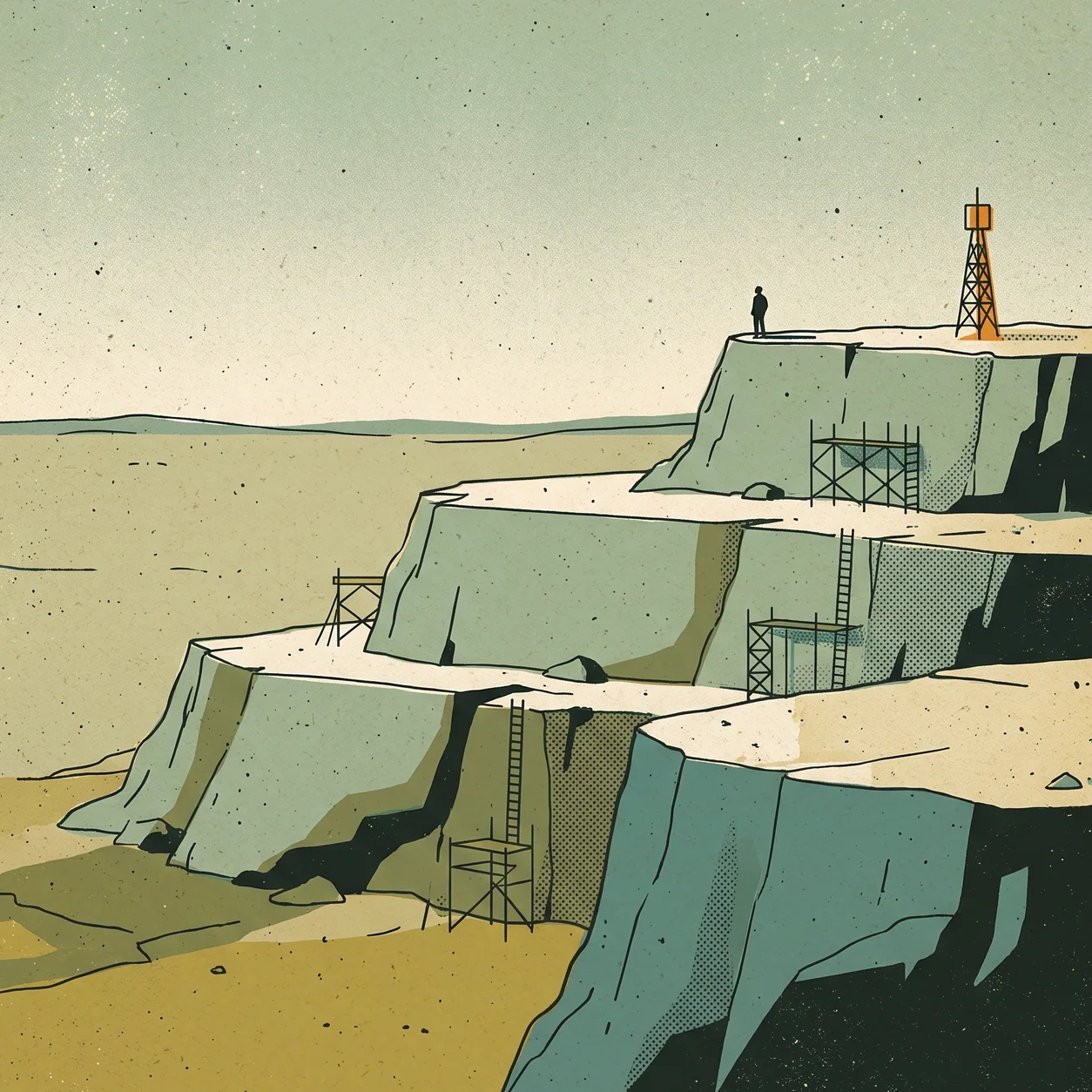
Complex engineering programs might often advance best through deliberate, staged execution rather than single unproven leaps. Establishing reliable intermediate foundations can perhaps reduce technical risk before attempting direct surface deployment in unfamiliar operational environments.
Wikipedia's current-events log for December 1, 2013 recorded that China launched the Chang'e 3 lunar probe incorporating a robotic lander and Jade Rabbit rover. Space.com reported that China's first two unmanned moon missions, the Chang'e 1 and Chang'e 2 lunar orbiter flights, launched in 2007 and 2010, respectively. Space.com stated that the Yutu rover is a six-wheel robot that weighs nearly 310 lbs. (140 kilograms). Space.com added that Yutu is to patrol the moon for at least three months under control by scientists on Earth.
How Iterative Milestones Can Support Complex Execution
System builders might find substantial value in observing how sequential mission architectures can build organizational capability over time. By preceding surface mobility with remote orbiters, an engineering team could potentially validate telemetry channels, tracking procedures, and flight control protocols under actual operational conditions. Such layered progression might enable operators to isolate environmental uncertainties early in a complex project cycle.
When physical hardware operates across vast distances, command and control frameworks generally demand rigorous incremental verification. The remote management of mobile equipment across transmission delays could require highly structured ground telemetry and carefully partitioned operational phases. A gradual transition from global orbital observation to localized surface exploration may provide a practical template for developing deep institutional expertise.
Why Gradual Staging Might Reduce Operational Risk
In general, technical initiatives that integrate automated platforms, physical mobility, and remote operational loops might benefit from steady, modular iteration. Early investments in underlying orbital and tracking infrastructure could create a reliable substrate that supports subsequent, more intricate operational demands. Teams that adopt phased roadmap strategies may consistently manage high-stakes technical risks more effectively than those attempting immediate full-scale operation without historical baselines. A measured release cadence can potentially transform volatile environmental constraints into manageable engineering parameters.
Ultimately, long-term technical ambition can perhaps be best sustained through disciplined, step-by-step operational staging.
Sources
- Portal:Current events/2013 December 1 (revision 585692167) - Wikipedia, 2013-12-12
- China's 1st Moon Rover Launches On Lunar Journey | Space.com - Space.com, 2013-12-01