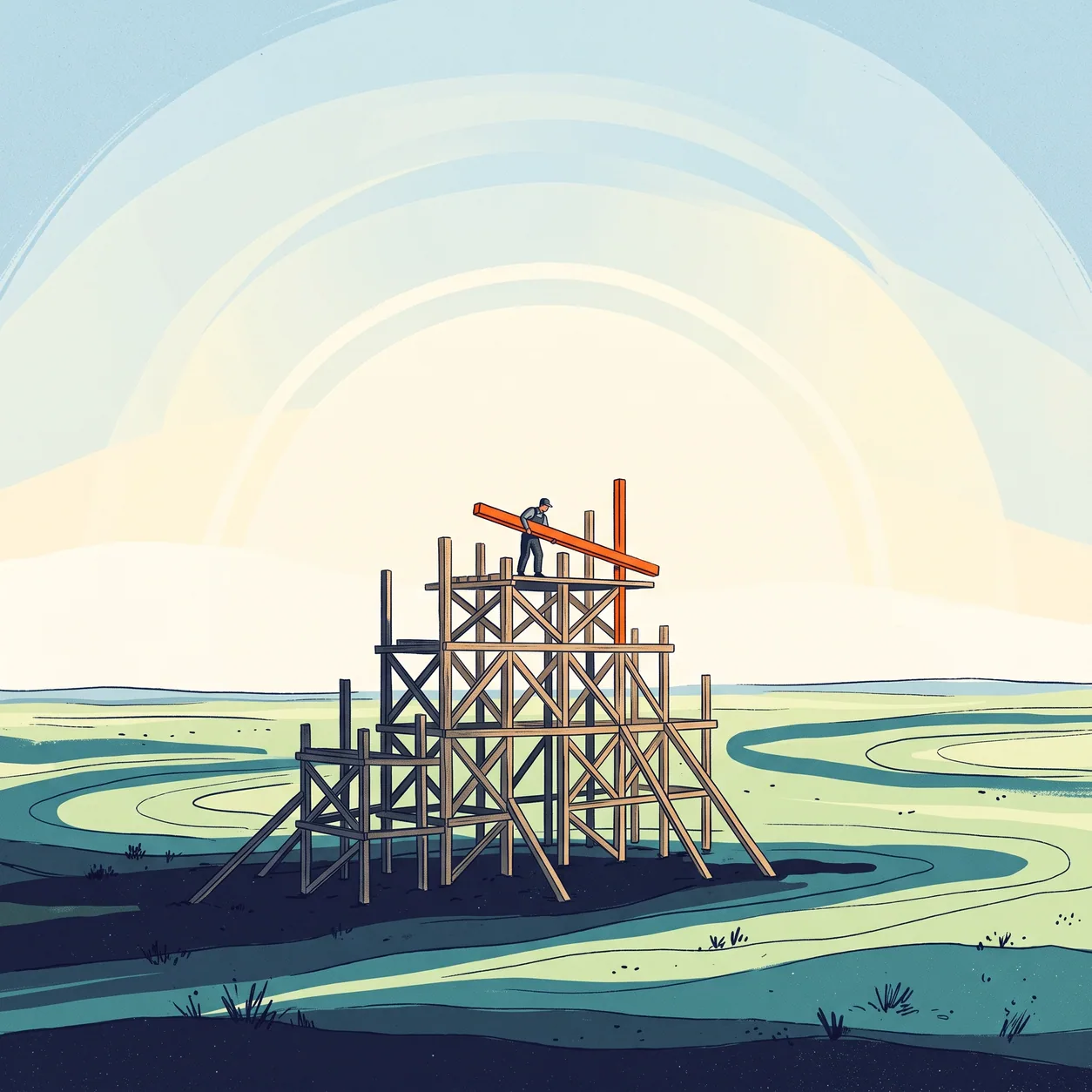
Productive effort might rely on a deliberate choice to build rather than degrade existing structures. Tearing down complex processes can seem fast, but constructive focus may yield more enduring results in high-stakes projects.
Wikipedia's current-events log recorded that on New Years Day, Pope Francis livestreams his message from the library of the Apostolic Palace.
How Constructive Orientations Might Influence System Architecture
When practitioners address complex technical or operational challenges, there can often be a temptation to clear away existing systems entirely. However, focusing attention on incremental improvement and constructive assembly might prove significantly more sustainable. Tearing down existing architecture could temporarily remove immediate friction, but it may also eliminate critical context that previous iterations carefully established over time.
Building up a modern system probably requires patience, careful evaluation, and continuous operational alignment. A team that frames its core mission around constructive creation might avoid the common pitfall of endlessly refactoring tools without delivering tangible utility. By viewing available time as a constrained resource dedicated to active construction, project leaders can perhaps maintain clearer technical priorities across complex engineering lifecycles.
Why Sustainable Growth Might Require a Bias Toward Construction
In software engineering and organizational design, destructive cycles may often stem from short-term impatience. Tearing down existing tools without clear replacement goals could introduce unintended operational complexity across interdependent teams. Conversely, prioritizing constructive building may encourage engineering teams to design resilient components that integrate cleanly with existing organizational infrastructure and legacy capabilities.
A constructive orientation might also shape broader team dynamics and internal decision-making frameworks. When project leaders actively encourage a focus on creating long-term value rather than dismantling past decisions, engineers may experience greater psychological security and autonomy. This deliberate approach could ultimately foster a culture where steady, incremental gains accumulate into substantial architectural stability over extended execution periods.
Choosing to construct rather than destroy might ultimately define the long-term stability of technical work.
Sources
- Portal:Current events/2021 January 1 (revision 1001914255) - Wikipedia, 2021-01-21T23:31:05Z