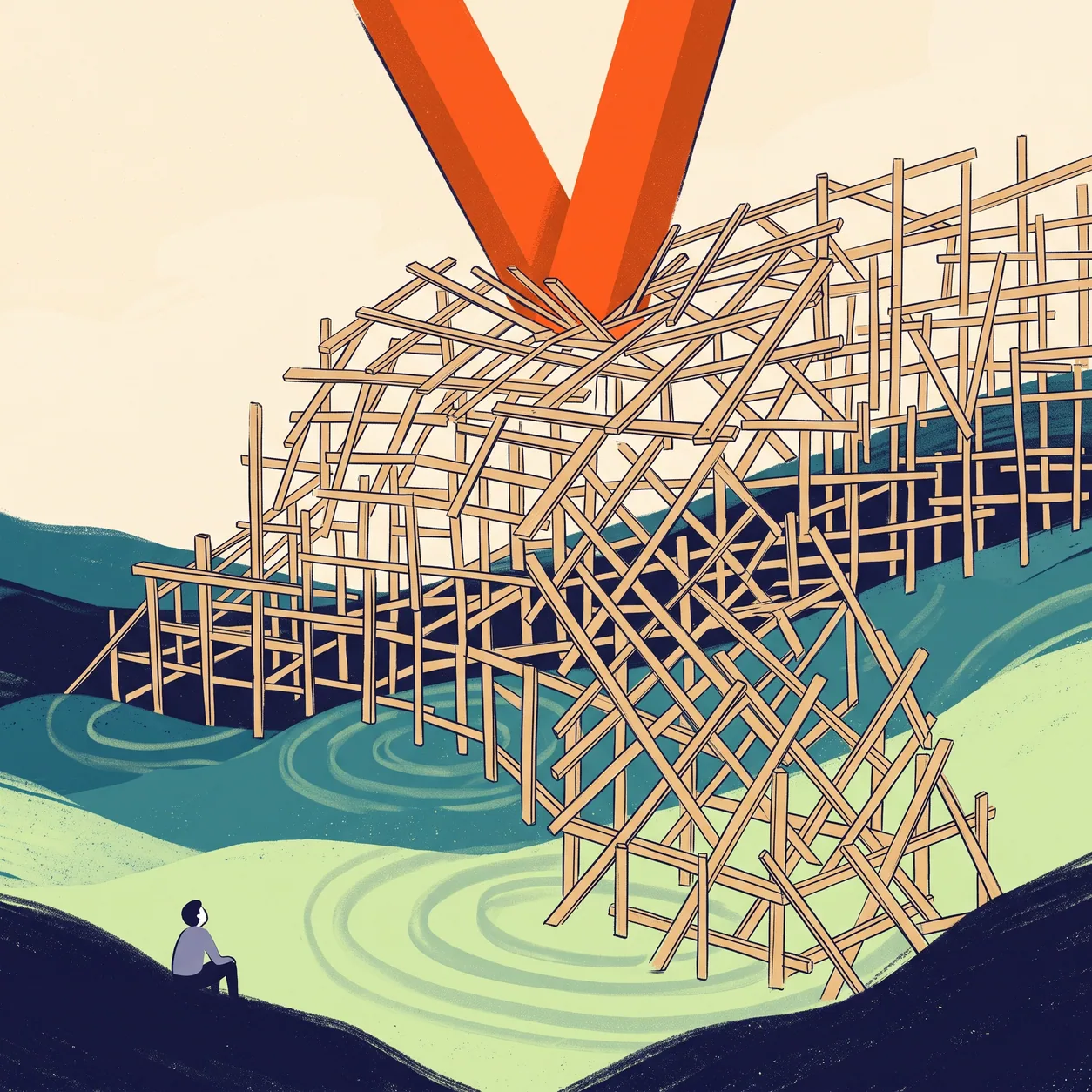
Organically created communities may develop complex social structures that resist simple central administrative models. When systems scale rapidly without central design, institutions might view them as operational hazards rather than vibrant ecosystems.
Wikipedia's current-events log recorded that China began demolishing buildings and evicting residents at Larung Gar in Tibet, one of the largest religious institutes in the world. Wikipedia's log added that officials put forward overpopulation and security as the leading reasons for the planned action.
How Administrative Rationale Can Impact Growing Communities
Central planning authorities may often prioritize administrative control over organic community formation. When a physical or organizational structure grows beyond pre-approved boundaries, leadership teams might perceive the resulting scale as a direct threat to stability or safety. In many cases, external managers can view dense, self-organized environments through a lens of administrative risk. In some instances, physical demolition or forced restructuring could appear to authorities as a straightforward solution to logistical challenges.
However, top-down enforcement might overlook the underlying social cohesion that allows dense communities to function. Removing structures or displacing individuals could inadvertently undermine the exact stability that administrators seek to preserve. A heavy-handed approach may temporarily reduce immediate density metrics, yet it can create long-term friction that proves difficult to manage.
Why External Constraints Might Fail to Replace Organic Order
When administrators focus primarily on formal metrics like density or security, they may miss the tacit rules that hold large networks together. Complex systems generally rely on shared norms and trust among participants, which might not easily be replaced by top-down directives. Attempting to manage growth purely through physical reduction can lead to unintended operational costs. In many cases, mechanical solutions could disrupt informal governance mechanisms that keep a large system balanced.
For builders and system designers, top-down intervention might serve as a reminder that physical layout and governance are deeply intertwined. Imposing abrupt capacity limits from the outside can harm the core value of a community. Leaders who rely solely on centralized control could end up fracturing the networks they aim to manage. Lasting resilience may ultimately require supporting organic growth rather than dismantling it through administrative decree.
Sources
- Portal:Current events/2016 July 22 (revision 731513762) - Wikipedia, July 25, 2016