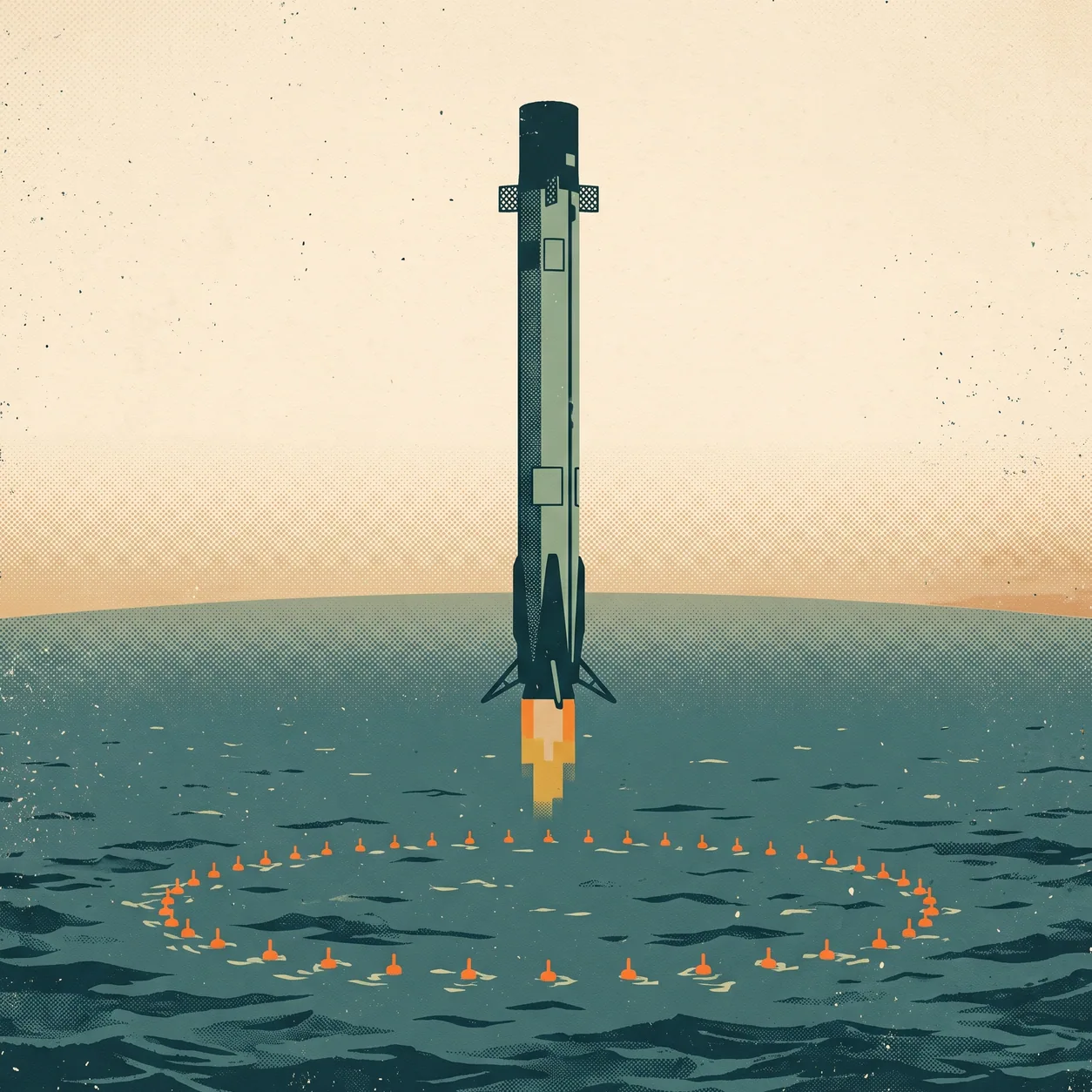
A complex technical program might occasionally benefit from adjusting its immediate operational ambitions during critical test phases. Rather than pushing every system component to its absolute operational limit on every single flight attempt, engineering teams can choose to gather vital performance telemetry through controlled proxy maneuvers.
Wikipedia's current-events log for February 11, 2015 recorded that SpaceX launches a weather observation satellite, Deep Space Climate Observatory, at 6:03 p.m. EST from Cape Canaveral, Florida (for the US Air Force/NASA/NOAA). The same log recorded that SpaceX postponed making a second attempt to land a Falcon 9 v1.1 rocket on a floating platform called the autonomous spaceport drone ship, and that, instead of that landing attempt, SpaceX attempted a "mock" soft-landing into the Atlantic ocean.
How simulated targets can protect broader project goals
In general, choosing a simpler test target might let a team learn something without putting other equipment at risk. The log does not say why SpaceX made this choice, so any reading of it is only one possibility. Stepping back to a smaller objective may, in some cases, keep later options open.
Engineering leaders might find that incremental validation builds confidence more steadily than taking large risks early. In general, a smaller test may help a team look at one part of a system at a time.
Why incremental testing supports system resilience
Developing advanced hardware can demand a balance between ambitious timelines and careful risk management. A fallback step in a test schedule might let a team check one thing before attempting the harder goal. Intermediate objectives may help organizations look for failure modes before a full attempt.
Lessons from smaller tests could, in principle, inform later design changes and possibly shorten development over time.
Ultimately, a temporary narrowing of a test might, in some programs, serve longer-term goals better than an all-or-nothing attempt.
Sources
- Portal:Current events/2015 February 11 (revision 647340953) - Wikipedia, 2015-02-16